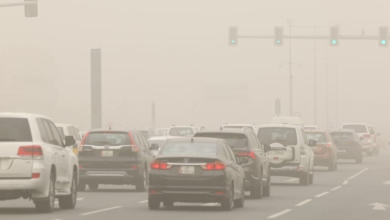

The National Center for Meteorology issued its daily weather forecast for Saudi Arabia, indicating continued weather fluctuations across most regions. The report warned of the ongoing impact of active winds stirring up dust and sand, which could lead to near-zero horizontal visibility in parts of Tabuk, Al-Jawf, Hail, and the Northern Borders regions. The center also noted that these weather conditions may be accompanied by scattered thunderstorms.
Background on climatic phenomena in Saudi Arabia
The Arabian Peninsula, and Saudi Arabia in particular, experiences sharp climatic fluctuations during the transitional periods between seasons, especially in spring and autumn. The region is affected by the convergence of different air masses, as cold air masses advance from the north and collide with warm, moist air masses coming from the south. This collision creates atmospheric instability, leading to the formation of thunderstorms and active surface winds that stir up dust from vast deserts such as the Rub' al Khali and the Nafud al-Kabir.
Rain and flash flood forecasts for southern and western regions
Conversely, the report indicated that the chance of moderate to heavy thunderstorms remains, potentially leading to flash flooding. This weather pattern is particularly concentrated in parts of Najran, Jazan, and Asir regions. These storms are expected to be accompanied by hail and strong winds. Partly cloudy skies with scattered thunderstorms are also expected in parts of Al-Baha, Makkah, Riyadh, and Qassim regions.
Expected effects of weather fluctuations
These weather fluctuations have direct impacts on various aspects of life. Locally, dust storms affect land and air transportation due to reduced visibility, and they pose a health challenge for those with respiratory illnesses and asthma. Heavy rains, while essential for replenishing water resources and supporting agriculture, can also pose a threat to infrastructure if they lead to flash floods, necessitating heightened vigilance and adherence to civil defense guidelines.
Red Sea situation
- Surface winds: Northerly to northwesterly at 15-45 km/h in the northern and central parts, possibly reaching 55 km/h towards the Gulf of Aqaba. In the southern part, winds will be southerly to southeasterly, shifting to northerly and northwesterly at night, at speeds of 10-28 km/h.
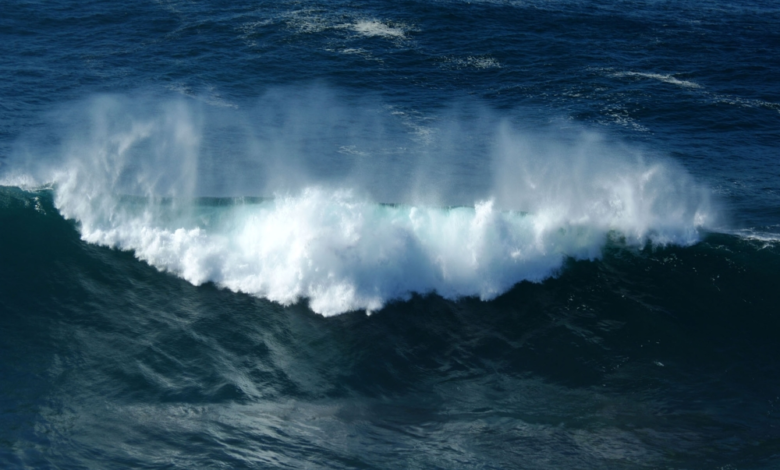
- Wave height: from one to two meters in the northern and central parts, reaching two and a half meters towards the Gulf of Aqaba. From half a meter to one meter in the southern part.
- Sea state: Moderate waves in the northern and central parts, becoming rough towards the Gulf of Aqaba, while it is light waves in the southern part.
Arabian Gulf situation
- Surface winds: Northwesterly to westerly at a speed of 10-35 km/h.
- Wave height: from half a meter to one and a half meters.
- Sea state: Light to moderate waves.