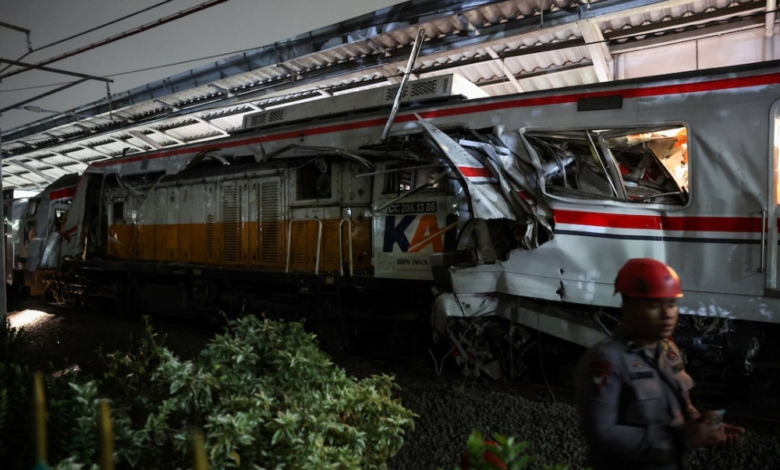

A tragic accident occurred on the outskirts of the Indonesian capital, Jakarta, late Monday evening, leaving at least two people dead and others injured in a train collision, according to the state-owned railway company, PT Kereta Api Indonesia (KAI). The accident took place near Bekasi Timor station, about 25 kilometers east of Jakarta, causing shock and prompting an immediate mobilization of emergency and rescue teams.
Details of the incident and rescue efforts
A spokesperson for the railway company told local television station Kompas that initial hospital records confirmed two fatalities, while the exact number of injured was still unclear. The spokesperson added that relevant authorities, including firefighters, the military, and the National Search and Rescue Service, were working continuously at the scene to evacuate the victims and transport the injured to the nearest hospitals. "We have done everything we can to evacuate the victims as quickly as possible," the spokesperson stated. "We are still gathering data and evidence, and a detailed timeline of events will be released later by the relevant authorities." The station broadcast footage of ambulances arriving at the scene, while paramedics carried the injured on stretchers amidst the chaotic scene.
Context of transport accidents in Indonesia
This incident has once again brought to the forefront Indonesia's long-standing transportation safety record, which has been a major concern. Transportation accidents are relatively common in this vast archipelago, often attributed to outdated infrastructure, aging vehicles and trains, and inadequate maintenance. The railway network on the densely populated island of Java relies on infrastructure, some of which dates back to the colonial era, and despite government efforts at modernization, challenges persist.
The importance of the incident and its expected impact
Locally, such an incident causes significant disruption to public transportation, which millions of commuters rely on daily to travel between Jakarta and surrounding cities. It is expected to lead to widespread delays and service disruptions for several days. Nationally, it places increasing pressure on the government and the railway company to accelerate the modernization of safety and signaling systems and fleet renewal. This comes at a time when Indonesia is striving to bolster its infrastructure with major projects such as the high-speed rail line, making even routine train accidents a sensitive public issue. The National Transportation Safety Committee (KNKT) is likely to launch a comprehensive investigation to determine the root causes of the accident, whether human error or technical failure, and to provide recommendations to prevent similar tragedies from occurring in the future.