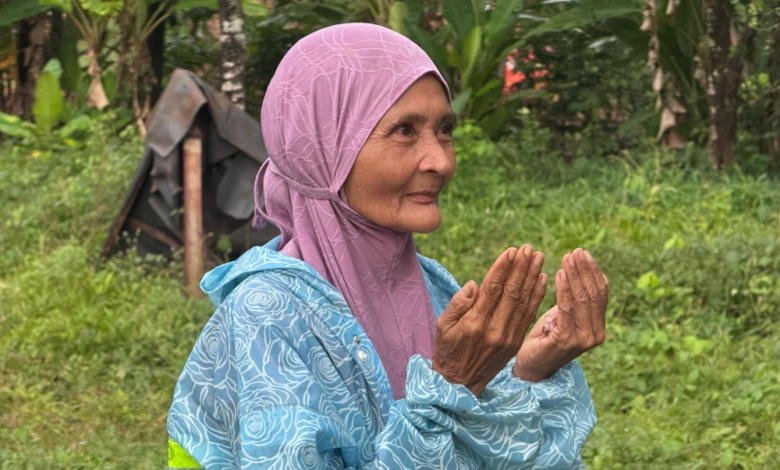

In the Indonesian city of Makassar, where life is woven from the simplicity of the land and the toil of hands, the elderly Jumariya has spent seven decades cultivating rice seedlings on her small farm, nurturing in her heart a single, unwavering wish: to reach the Holy House of God and perform the Hajj pilgrimage. For seventy years, she has endured with patience and tireless work, saving from the sweat of her brow what she could, not for worldly possessions, but for a sacred dream that has remained her sole guiding principle.
Jomaria lived a quiet life, devoid of a partner and the clamor of children; her solitude was her companion on her long journey of struggle. When the moment came for the good news of her acceptance to undertake her faith-based pilgrimage, she stood alone at the airport, with no one to bid her farewell except the walls of her humble home, which she left behind. With a small suitcase and great patience, she walked among the throngs of travelers, just as she had always spent her days alone on her farm.
The “Makkah Route” initiative: A qualitative leap in serving the guests of God
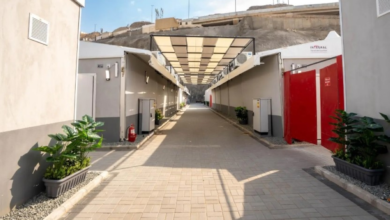
Jomaria's stay in the Makkah Route Initiative was short-lived. Upon arriving at the Sultan Hasanuddin International Airport terminal, the scene changed completely. She was warmly welcomed with the hospitality befitting a pilgrim, and her unit received exceptional care. The Makkah Route Initiative, launched by the Saudi Ministry of Interior as part of the Pilgrim Service Program—one of the Saudi Vision 2030 programs—is a comprehensive system designed to facilitate the pilgrim's journey from the moment they leave their home country.
Through this initiative, all entry procedures into the Kingdom are completed at the departure airport, including issuing the electronic visa, verifying health requirements, registering and collecting biometric data, and tagging and sorting luggage. Upon arrival at King Abdulaziz International Airport in Jeddah and Prince Mohammad Bin Abdulaziz International Airport in Madinah, pilgrims are transferred directly to dedicated buses to be taken to their accommodations, while their luggage is delivered to them by the relevant authorities.
The strategic importance and humanitarian impact of the initiative
The significance of the “Makkah Route” initiative extends beyond simply streamlining procedures; it reflects the Kingdom’s commitment to providing the highest quality services to pilgrims. Internationally, the initiative strengthens bilateral relations between the Kingdom and its beneficiary countries, which include Indonesia, Pakistan, Malaysia, Morocco, Bangladesh, Turkey, and Côte d'Ivoire. It also highlights the advanced organizational and technological capabilities that the Kingdom employs to manage Hajj seasons with exceptional efficiency.
On a humanitarian level, its impact is clearly evident in stories like that of Jomaria. For the elderly and the sick, this service eliminates long hours of waiting and exhaustion, transforming their arduous journey into a comfortable and reassuring experience. Jomaria left her homeland carrying not only a plane ticket but also seventy years of patience and hope, only to be met with exceptional humanitarian service that dispelled the loneliness of the journey and gave her a sense of security she hadn't felt in years, allowing her to begin her pilgrimage to Mecca with a tranquil heart and a soul filled with peace.