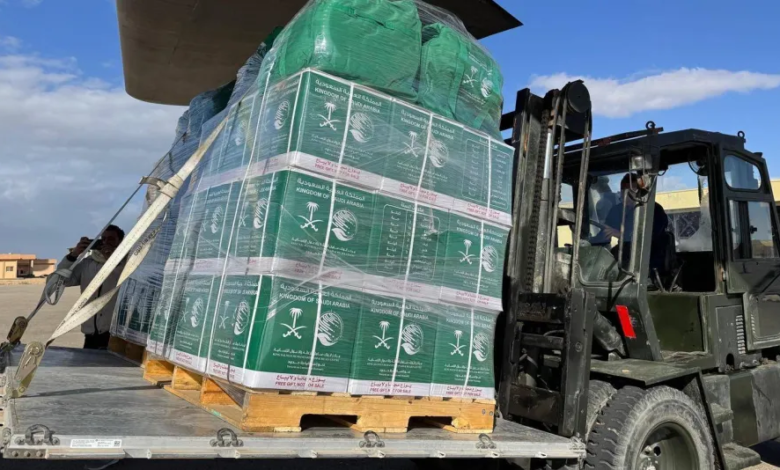

The 77th Saudi relief plane arrived at El Arish International Airport in the Arab Republic of Egypt, en route to deliver its cargo to those affected in the Gaza Strip. This aid comes as part of the popular campaign to support the brotherly Palestinian people in the Gaza Strip, directed by the Custodian of the Two Holy Mosques, King Salman bin Abdulaziz Al Saud, and His Royal Highness Crown Prince Mohammed bin Salman bin Abdulaziz, Prime Minister.
Saudi air bridge continues
The King Salman Humanitarian Aid and Relief Center continues to operate its relief air bridge regularly, with the latest aircraft carrying a variety of aid shipments, including food, medical supplies, and shelter materials, all urgently needed given the dire humanitarian situation in the Gaza Strip. The arrival of this 77th aircraft reflects Saudi Arabia's commitment to maintaining a continuous flow of aid to ensure it reaches the largest possible number of beneficiaries.
High-level logistical coordination
The transfer of aid is subject to close and continuous coordination between the Saudi and Egyptian sides. Upon arrival of the aircraft at El Arish Airport, the Egyptian Red Crescent receives the shipments and prepares them for overland transport through the designated crossings into the Gaza Strip. El Arish serves as a vital logistical hub during this crisis, receiving international aid before its entry into the Strip.
The humanitarian and historical dimension of Saudi support
This support is not an isolated or emergency event, but rather an extension of a long history of standing with the Palestinian people in various crises. Through these intensive relief efforts, the Kingdom of Saudi Arabia reaffirms its leading role in humanitarian work regionally and internationally. The Saudi public campaign, through the "Sahem" platform, successfully raised substantial donations, reflecting the solidarity of the Saudi people with their brothers and sisters in Palestine. This enabled the King Salman Humanitarian Aid and Relief Center to operate this large number of flights, in addition to the maritime bridges that transported thousands of tons of aid.
The importance of aid at the current time
This aid is of paramount importance given the severe shortages of food, medicine, and fuel in Gaza. Through its diversified assistance (including medical, food, and shelter aid), the Kingdom aims to address urgent basic needs, support the strained health sector, and provide a decent standard of living for those affected and displaced, thereby contributing to alleviating the humanitarian suffering in the Gaza Strip.