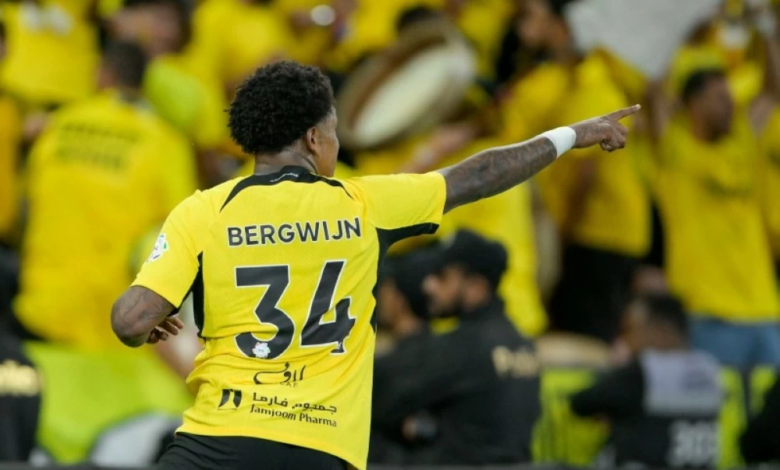

In a decisive response to the recent speculation dominating the sports scene, Dutch winger Steven Bergwijn, who plays for Saudi club Al-Ittihad, broke his silence to clarify the rumors circulating about a strained relationship with Portuguese coach Sergio Conceição. The player confirmed that all the talk of personal or professional disagreements is completely unfounded, emphasizing that their relationship is built on mutual respect and high professionalism. This comes after press leaks suggested the club intended to release him during the current transfer window.
In a recent television interview, Bergwijn explained that he is fully aware of the rumors circulating in the media and on social media platforms, but he has chosen to ignore them and not give them undue importance. He indicated that his happiness and stability within the club are the main reasons for disregarding these rumors, emphasizing his complete commitment to his contract and his desire to contribute to the team's success.
These statements come at a time when Al-Ittihad Club is striving to establish technical and administrative stability, especially given the fierce competition in the Saudi Professional League. Maintaining team cohesion and avoiding media distractions are among the most important factors the Jeddah club's management is focusing on to return to winning ways, with foreign players representing a cornerstone of the club's project to compete both domestically and continentally.
Speaking about his performance, Bergwijn emphasized that his focus is entirely on training and matches, praising the stimulating environment provided by Al-Ittihad Club, which helps any professional player to shine and make history. He cited the team's recent match against Al-Taawoun as practical proof of the harmony between the players and the coaching staff. He commended Al-Taawoun's organization and strength, affirming that Al-Ittihad's well-deserved victory in that match reflects the hard work being done behind the scenes.
This denial is particularly significant given Al-Ittihad's large fan base and the impact any news concerning its stars has on the Saudi sports scene. A stable relationship between the coach and the players is key to success in upcoming competitions, especially since Al-Ittihad fans expect performances befitting the club's prestigious history, and consider Bergwijn one of the key players expected to make a difference in the attacking third.