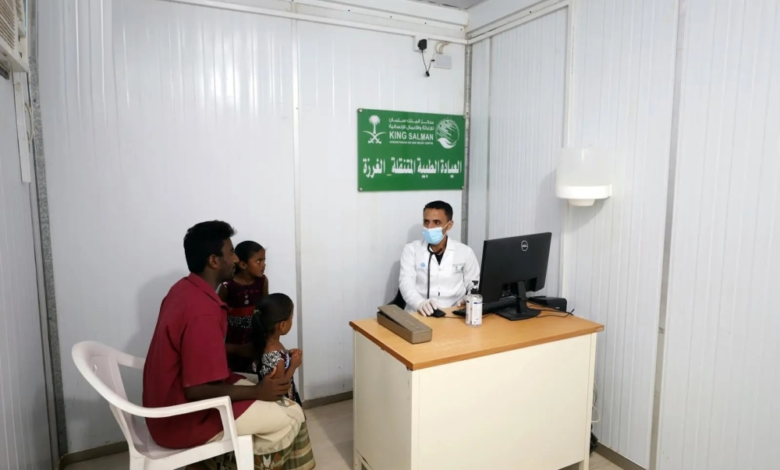

The mobile medical clinics of the King Salman Center for Relief and Humanitarian Aid continued to provide vital treatment services to beneficiaries in the Al-Gharza area of Haradh District in Hajjah Governorate, Yemen, where 267 individuals benefited from these services during the period from January 7 to 13, as part of the ongoing efforts made by the Kingdom of Saudi Arabia to alleviate the suffering of the brotherly Yemeni people.
In detailing the services provided, field reports indicated that the Infectious Disease Control Clinic received the largest number of patients, with 172 beneficiaries, reflecting the crucial preventative role these clinics play in containing communicable diseases. The Emergency Clinic treated 44 cases requiring immediate intervention, while the Internal Medicine Clinic provided services to 50 individuals, and the Reproductive Health Clinic received one patient. Regarding support services, the Nursing Services Department attended to 105 patients, and free medication was dispensed to 262 patients. The Surgery and Dressing Clinic treated 20 patients, and two activities were conducted to ensure the safe disposal of medical waste.
These efforts come at a critical humanitarian juncture, as Yemen's health sector faces immense challenges due to the current situation, leading to the closure of numerous health facilities, particularly in border and remote areas such as Hajjah Governorate. Mobile clinics play a pivotal role in bridging this gap, delivering medical services to the most vulnerable populations in their communities, thus sparing them the hardship of travel and the exorbitant costs of treatment amidst the dire economic conditions.
Strategically, the mobile clinics project is part of a comprehensive system of relief projects implemented by the King Salman Humanitarian Aid and Relief Centre in Yemen, encompassing food security, shelter, environmental sanitation, and infrastructure support. These medical interventions are particularly important in preventing outbreaks of epidemics and infectious diseases that often spread in conflict zones and displacement camps, making these clinics the first line of defense for protecting public health in those areas.
This ongoing support reflects the Kingdom of Saudi Arabia's unwavering commitment to supporting its brothers and sisters in Yemen across various sectors. The Kingdom is at the forefront of donor countries for humanitarian response plans in Yemen. The anticipated impact of these services extends beyond immediate healthcare, encompassing the strengthening of social stability by providing a health safety net for affected families. This underscores the profound humanitarian dimension of Saudi foreign policy and its leading role in relief efforts at both the regional and international levels.