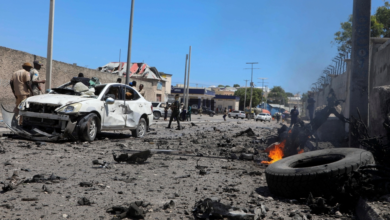

Details of the recent Afghanistan earthquake and the death toll
The Afghan capital, Kabul, and other parts of the country were struck by another natural disaster, with eight people killed and a child injured in a powerful earthquake that hit Afghanistan on Friday. According to official data from the Afghan Disaster Management Authority, the victims died when their house collapsed in Kabul as a result of the violent tremor. Many residents in various parts of the country reported feeling the ground shake beneath their feet, but no other casualties have been reported in those areas so far.
The epicenter and magnitude of the earthquake according to international observatories
The German Research Centre for Geosciences (GFZ) announced that the earthquake in Afghanistan measured 5.9 on the Richter scale. The center explained in its report that the epicenter was located in the rugged Hindu Kush mountain range, at a considerable depth of 177 kilometers below the Earth's surface. This great depth directly contributed to the widespread impact of the earthquake, which was felt far beyond Afghanistan's borders.
Regional impact: Aftershocks reaching Pakistan and India
The earthquake's impact was not confined to Afghanistan; it extended to neighboring countries, highlighting the regional significance and wide-ranging impact of this geological event. Observatories recorded strong aftershocks felt as far away as Islamabad, the capital of Pakistan, and New Delhi, the capital of India. This widespread seismic activity is attributed to the great depth of the earthquake's epicenter in the Hindu Kush mountain range, a well-established scientific phenomenon where deep seismic energy travels much farther than that of shallow earthquakes.
The historical and geological context of earthquakes in Afghanistan
Afghanistan, and especially the Hindu Kush region, is one of the most seismically active areas in the world. This is due to its complex geographical location on a tectonic fault line where the Indian and Eurasian tectonic plates collide. This constant collision generates immense pressure that is released in the form of devastating earthquakes from time to time.
Historically, Afghanistan has suffered a series of devastating earthquakes that have claimed thousands of lives. For example, in October 2023, a series of powerful earthquakes struck Herat province in the west of the country, killing more than 2,000 people and destroying entire villages. Prior to that, in June 2022, a powerful earthquake struck Paktika province, leaving more than 1,000 dead. These recurring events highlight the extreme fragility of Afghanistan's infrastructure, where most homes in villages and informal settlements are built of mud and untreated bricks, making them highly susceptible to collapse during any seismic activity.
Humanitarian challenges and the impact of the disaster
This earthquake adds to the burdens already borne by the Afghan people, who are suffering from successive economic and humanitarian crises. Rescue and disaster management teams face immense challenges in reaching the affected areas, particularly given the rugged mountainous terrain and the lack of modern search and rescue equipment. The recurrence of these natural disasters necessitates international intervention to provide urgent relief support, as well as the critical need to develop earthquake-resistant building strategies to mitigate future human and material losses.