
Ongoing efforts to protect the Saudi environment
As part of ongoing efforts to protect vegetation and wildlife in the Kingdom of Saudi Arabia, the Special Forces for Environmental Security continue their rigorous operations to apprehend violators of environmental regulations. Recently, these efforts resulted in the detection of several environmental violations in various regions, reflecting the Kingdom's commitment to enforcing strict regulations to preserve natural resources and curb practices that harm the environment.
A fire violation was recorded in Medina
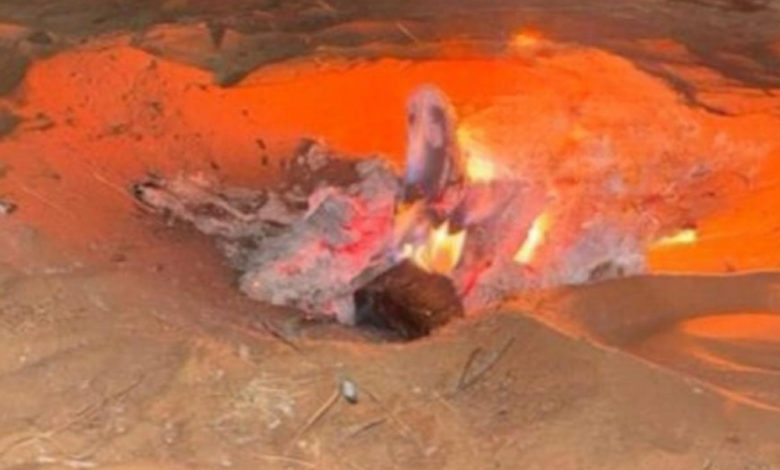
In the Madinah region, the Special Forces for Environmental Security apprehended a citizen for violating environmental regulations by starting a fire in an unauthorized area. This action was taken due to the violator's failure to comply with official instructions and guidelines aimed at preserving vegetation and preventing environmental disasters, such as forest fires that destroy vast green spaces. Legal procedures were immediately applied against him. The forces emphasized that the penalty for starting fires in unauthorized areas within forests and national parks includes a fine of up to 3,000 Saudi Riyals, intended to deter such behavior that threatens environmental safety.
Violation of overgrazing in the King Abdulaziz Royal Reserve
In a separate incident, and as part of efforts to protect nature reserves, the Special Forces for Environmental Security apprehended another citizen for illegal grazing within the King Abdulaziz Royal Reserve. The violation involved grazing 20 camels in prohibited areas, negatively impacting biodiversity and plant regeneration within the reserve. The necessary legal measures were taken against the violator, and it is worth noting that the penalty for grazing camels in prohibited areas is a fine of 500 riyals per camel.
General context: Vision 2030 and the Saudi Green Initiative
These stringent measures come within the framework of the Kingdom's Vision 2030, which places great importance on environmental protection. Saudi Arabia has launched the "Saudi Green Initiative," which aims to plant billions of trees, reduce carbon emissions, and combat desertification. The establishment of the Special Forces for Environmental Security is considered a strategic and historic step to ensure the enforcement of environmental laws on the ground and to protect the natural resources of future generations from any encroachment.
The importance of the event and its expected impact
Locally: These enforcement measures contribute to raising public awareness of the importance of preserving parks and nature reserves, and curb harmful practices that lead to soil degradation and desertification, thus ensuring a healthy and sustainable environment for citizens and residents.
Regionally and internationally: These measures enhance the Kingdom's position as a leading country in environmental protection and combating climate change in the Middle East, and reaffirm its commitment to international agreements aimed at preserving biodiversity and reducing its carbon footprint.
Call to report environmental violations
In closing, the Special Forces for Environmental Security urged all members of the community to actively cooperate and report any instances of environmental or wildlife violations. Reports can be submitted by calling 911 in the Makkah, Madinah, Riyadh, and Eastern regions, or 999 and996 in the rest of the Kingdom. The authorities emphasized that all reports are treated with complete confidentiality, and the reporter will not be held legally liable, thus encouraging everyone to be key partners in protecting the nation and its environment.