Egypt's military maneuvers in Sinai: their implications and impact on Israel

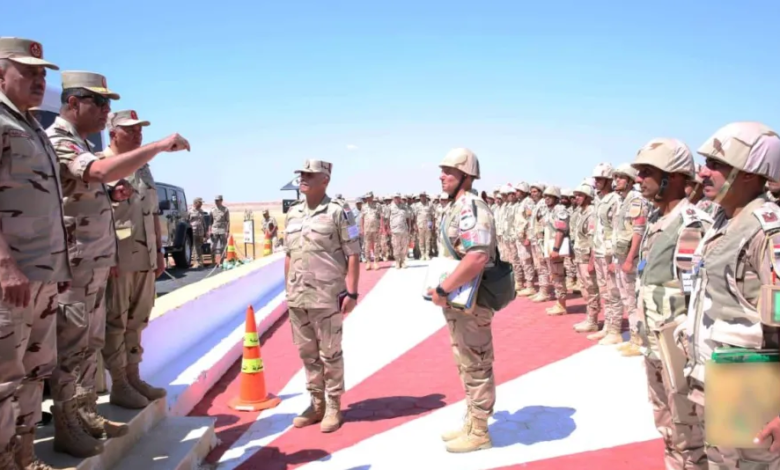
The recent large-scale military exercises conducted by the Egyptian army have garnered significant attention and in-depth analysis in Israeli media and military circles. The scale of the exercises and the nature of the scenarios they simulate have been the focus of considerable scrutiny, prompting a sense of cautious concern. These drills, often bearing coded names such as "Badr" or "Qader," are not merely routine displays of force; they carry multifaceted strategic messages and evoke a complex historical relationship between the two countries.
Historical context and complex relationships
To understand the reasons for Israeli anxiety, one must return to the October 1973 war, known in Israel as the Yom Kippur War. The Egyptian forces' crossing of the Suez Canal and the storming of the heavily fortified Bar-Lev Line constituted a pivotal event in the region's military history and left a profound psychological impact on the Israeli military establishment. Therefore, any Egyptian maneuver simulating a crossing of the canal or large-scale offensive operations in the Sinai Peninsula, even if purely training exercises, inevitably evokes memories of that war. Despite the passage of more than four decades since the signing of the Camp David Peace Accords in 1979, which established a cold peace and close security cooperation, a deep-seated historical mistrust persists beneath the surface.
The importance of the event and its expected impact
The importance of these maneuvers lies in several key points. Domestically, Egypt aims to test the readiness of its armed forces, integrate modern weaponry acquired from diverse sources, and demonstrate its ability to protect its national security and vital interests. Regionally, these exercises serve as a deterrent message to any regional powers that might threaten the stability of the region, and reaffirm that Egypt still possesses the strongest and most organized army in the Arab world. Internationally, they reflect the independence of Egyptian military decision-making and its ability to maintain the balance of power in the Eastern Mediterranean and the Middle East.
From an Israeli perspective, concerns focus on the size of the participating forces, the sophistication of the weaponry, and the nature of the offensive scenarios being practiced. Analysts in Tel Aviv believe that while these maneuvers do not pose an immediate threat, they are indicative of the Egyptian army's combat doctrine, which still considers Israel a "strategic enemy" in its training scenarios. This places the close security cooperation between the two countries, particularly in the fight against terrorism in Sinai, in a more complex context, highlighting the dual nature of the relationship: tactical cooperation on the one hand, and strategic caution on the other.