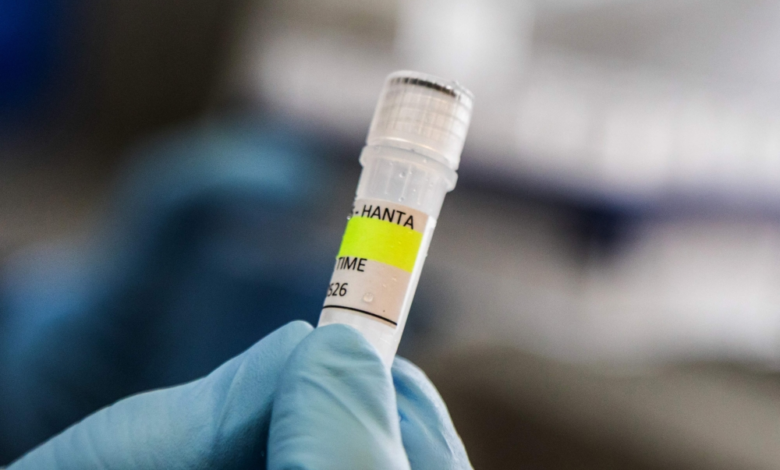

Global warning after passengers evacuated
The World Health Organization (WHO) issued a significant warning regarding the Hantavirus on board the MV Hondus cruise ship, emphasizing that health efforts are not yet complete, despite the successful evacuation of over 100 passengers and crew members. This statement was made by WHO Director-General Tedros Adhanom Ghebreyesus during a press conference in Madrid, where he stressed that the virus's long incubation period could lead to new cases emerging in the coming weeks among those who were on board the ship.
Ghebreyesus expressed his hope that all countries would adhere to the WHO's recommendations and guidelines for dealing with this outbreak and preventing its spread. The incident, which resulted in the deaths of three passengers and confirmed seven other cases, has raised global health concerns given the nature and severity of the virus.
What is the Hantavirus? Scientific and historical background
Hantavirus is a group of viruses primarily spread by rodents, such as mice and rats. The virus was first discovered during the Korean War in the 1950s near the Hantan River, hence its name. It is not usually transmitted from person to person; rather, humans become infected mainly by inhaling airborne particles contaminated with the urine, feces, or saliva of infected rodents, or by direct contact with these secretions.
Hantavirus causes two main diseases in humans: hantavirus pulmonary syndrome (HPS), which is common in the Americas and characterized by severe respiratory symptoms and a high mortality rate, andhemorrhagic fever with renal syndrome (HFRS), which is more prevalent in Europe and Asia and primarily affects the kidneys. Currently, there is no widely approved vaccine or specific treatment for the disease, and treatment relies on supportive care in intensive care units.
Global repercussions and health challenges
The Hantavirus outbreak on a cruise ship presents unique challenges for global health authorities. Cruise ships bring together people of different nationalities in a confined environment, which facilitates the spread of infection if a source, such as infected rodents, is present. The biggest challenge now lies in tracking and monitoring all passengers and crew members who were evacuated and returned to their home countries.
Because the virus's incubation period can last for weeks, infected individuals may not show symptoms until they return home, increasing the risk of delayed diagnosis and complicating containment efforts. While health officials have emphasized that the risk to the general public is low and have rejected comparisons to the COVID-19 pandemic due to the limited human-to-human transmission, the severity of the disease and its high mortality rate make each case a serious concern requiring a coordinated international response.
Updates on the situation on the stricken ship
According to the data released, seven cases of the virus have been confirmed among the survivors, in addition to an eighth case described as “probable.” Among those infected is a French woman who was admitted to intensive care and is now in stable condition. As for the MV Hondus, operated by Oceanwide Expeditions, its voyage to Rotterdam is expected to take six days. There are still 25 crew members on board, along with a medical team and the body of a German passenger who died from the infection.