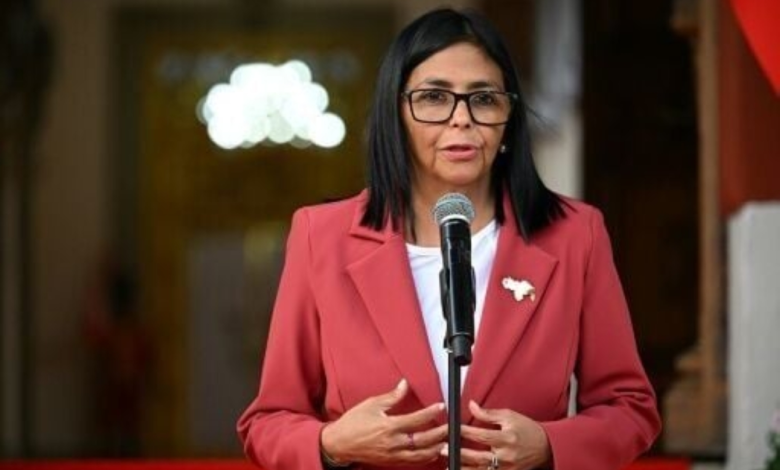

In a surprising political move reflecting a radical shift in foreign policy, the United States officially announced the lifting of economic and political sanctions imposed on Venezuela's interim president, Delcy Rodríguez. This significant development follows dramatic events in the capital, Caracas, where Rodríguez assumed power after a US military operation that ousted her predecessor, Nicolás Maduro, and transported him to the United States.
Details of the US decision and Rodriguez's statements
Official reports confirmed that the U.S. Treasury Department, specifically through the Office of Foreign Assets Control (OFAC), removed Delcy Rodriguez's name from its sanctions list on Wednesday. These sanctions had included a complete freeze on any assets she held within the United States, as well as a strict prohibition preventing U.S. companies and citizens from engaging in any financial or commercial transactions with her.
In her first official reaction, Rodriguez expressed her optimism about the next phase through her social media accounts, saying: 'We welcome President Donald Trump's decision as a positive step towards normalizing and strengthening relations between our two countries. We are fully confident that this important development will ultimately lead to the complete lifting of all sanctions currently imposed on our country and our people.'.
The historical context of sanctions and the importance of Venezuelan oil
To understand the implications of this decision, one must consider the historical context of relations between Washington and Caracas. Since 2019, the US administration has imposed a series of harsh sanctions on Venezuela's oil sector, the lifeblood of the country's economy. Venezuela possesses the world's largest proven oil reserves, making it a strategic player in the global energy equation.
Given the current geopolitical shifts, US President Donald Trump intends to exploit these vast oil reserves. In this context, the Office of Foreign Assets Control (OFAC) has begun gradually easing the embargo on Venezuelan oil exports, a move that could significantly impact the stability of global energy markets and provide additional supplies that might contribute to lowering global fuel prices.
Regional and international dimensions and the reopening of the embassy
The conciliatory steps were not limited to the economic sphere but extended to the diplomatic track. On Monday, Washington announced its historic decision to reopen the US embassy in Venezuela, seven years after its closure and the severing of direct diplomatic relations.
Since taking office, Rodríguez, the former vice president, has made a series of concessions and conciliatory gestures toward the US administration. In contrast, observers believe that President Trump's repeated statements about being the de facto ruler of the country from Washington reflect the extent of the new US influence in shaping Venezuelan policies.
The expected impact of the decision on various levels:
- At the local level: Lifting the sanctions is expected to contribute to reviving Venezuela's ailing economy and improving the living conditions of citizens after years of hyperinflation and shortages of basic goods.
- At the regional level: This rapprochement will redraw the map of alliances in Latin America, and may contribute to reducing waves of illegal immigration to neighboring countries in search of job opportunities.
- At the international level: The strong return of Venezuelan oil to global markets will enhance global energy security and reduce price volatility amid current international crises.