The Somali president warns: Our territorial integrity is a red line, and Red Sea security is a priority

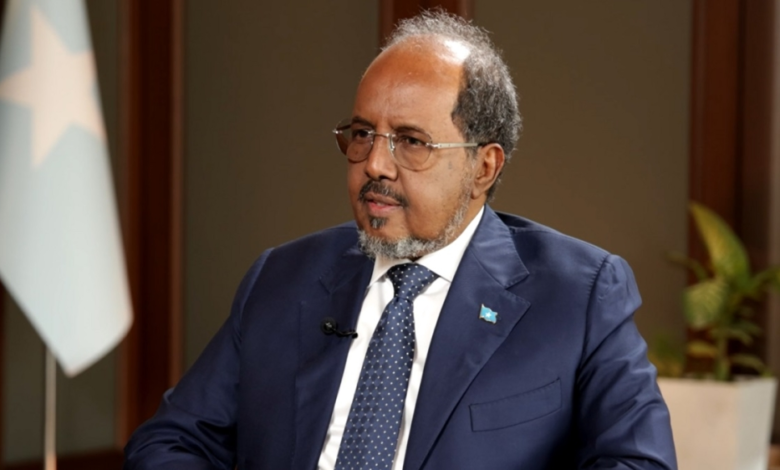
In a decisive statement, Somali President Hassan Sheikh Mohamud affirmed that Somalia's territorial integrity and national sovereignty are a non-negotiable red line, emphasizing that any attempts to undermine these principles will be met with firm rejection. These remarks came during an interview with Al Arabiya English, where the president clarified that any unilateral recognition of the "Somaliland" region or any external interference in internal affairs constitutes a blatant violation of international law and the UN Charter.
Historical context and the secession crisis
The Somali president's remarks come at a time of intense political tension in the Horn of Africa. Since 1991, the region of Somaliland has unilaterally declared its independence from the central government in Mogadishu, but it has not received formal international recognition for the past three decades. President Hassan Sheikh Mohamud indicated that the secession project has proven unsuccessful after more than 30 years, as no country in the world has recognized the region as an independent state, prompting the region's leaders to seek desperate options that could threaten the stability of the entire region.
The repercussions of Israeli recognition and the dangers of terrorism
In warning against foreign interference, the Somali president focused particularly on the danger of any potential Israeli recognition of Somaliland. He explained that such a move would not represent support for the right to self-determination, as some claim, but rather a geopolitical maneuver exploiting the fragile situation. He cautioned that this recognition would be a “free gift” to the al-Shabaab terrorist group, providing it with a powerful propaganda tool for recruitment and funding under religious and nationalist slogans. This, he argued, would undermine the tremendous efforts made by the Somali government and its international partners in liberating territory and combating extremism, especially the significant progress achieved since 2023.
Red Sea security and regional dimension
The Somali presidency placed this issue within its broader strategic context, emphasizing that Somalia's security is an integral part of the security of the Red Sea and vital international waterways. Somalia boasts the longest coastline on the African mainland and controls strategic waterways that impact global trade. Therefore, any disruption to the status quo or incitement of political chaos will have negative repercussions that extend beyond national borders, affecting regional and international peace and security.
Rejecting the displacement of Palestinians and adhering to dialogue
The President also addressed the rumors regarding the transfer of Palestinians to Somaliland, describing them as legally and morally unacceptable. He affirmed that Somalia rejects the principle of forced displacement and that Palestinians are committed to their land, considering the mere suggestion of such ideas a political crime. The President concluded by emphasizing that the Federal Government consistently extends its hand in peaceful political dialogue as the only option for resolving internal disputes, rejecting the use of military force due to its disastrous consequences for civil peace.