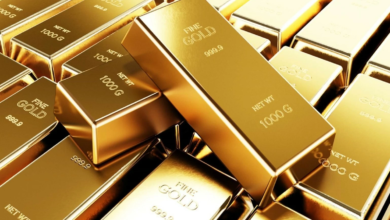

Precious metals markets saw a significant decline in trading today, with gold prices falling sharply, influenced by a range of economic and geopolitical factors that have dampened investor sentiment. This decline comes at a time of heightened uncertainty in global markets, making the movement of safe-haven assets a closely watched issue.
In trading details, gold futures for June delivery fell by nearly 1%, equivalent to a loss of $50.80 per ounce. Silver also followed suit, with its April futures contracts dropping by 2.19%, losing a significant portion of their value in a single session.
General context: The strength of the dollar and its impact on metals
This decline is primarily attributed to two main factors: the strengthening US dollar index and rising US Treasury yields. Historically, there has been a strong inverse relationship between the dollar and gold; when the dollar rises, gold, which is priced in US dollars, becomes more expensive for buyers using other currencies, thus reducing demand. Simultaneously, rising US Treasury yields have increased the opportunity cost of holding gold, as the precious metal does not generate any interest or yield, while bonds offer a guaranteed return, making them more attractive to investors in a high-interest-rate environment.
The importance and expected effects of geopolitical tensions
On the geopolitical front, this decline coincided with cautious anticipation regarding tensions in the Middle East, particularly concerns surrounding US-Iranian relations. While gold is considered a safe haven for investors during times of political turmoil, the strength of the US dollar overshadowed geopolitical concerns during this session. Statements by then-US President Donald Trump, hinting at the possibility of a comprehensive peace agreement, temporarily eased tensions, diminishing gold's appeal as a safe-haven asset.
Fluctuations in gold and silver prices have far-reaching effects that extend beyond individual investors. Central banks around the world, which hold substantial gold reserves, see their balance sheets impacted by these changes. Lower prices can also be beneficial for the jewelry industry and other industries that use silver, as it reduces raw material costs. Regionally, any escalation or de-escalation in the Middle East not only affects gold prices but also has implications for global energy markets and the stability of the entire region, making monitoring these developments crucial for the global economy.