Details of Trump's announcement suspending the attack on Iran and opening the Strait of Hormuz

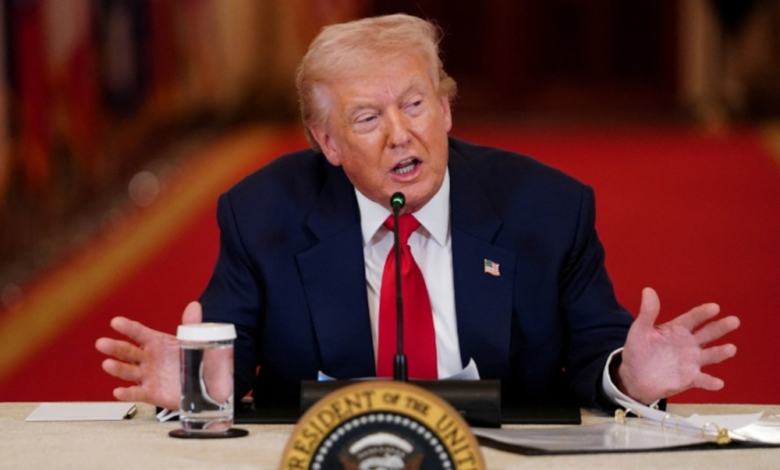
In a significant political and military move reflecting a shift in tensions, US President Donald Trump officially announced his approval of a two-week suspension of airstrikes against Iran. Trump clarified that this ceasefire would be reciprocal, but contingent upon Tehran's stance on maritime security, specifically the immediate reopening of the strategic Strait of Hormuz to international shipping.
Details of the agreement and the Iranian proposal
Al-Arabiya quoted the US president as saying that all previous points of contention with Tehran had been resolved. He indicated that this agreement was based on Iran's acceptance of the immediate and complete reopening of the Strait of Hormuz, and that Washington had agreed to suspend its strikes accordingly. Trump added, "We have made significant progress toward reaching a final agreement on a long-term peace with Iran, and we agreed to suspend the attack based on productive talks with the Prime Minister of Pakistan.".
In a related context, Trump asserted that US forces had achieved and exceeded all their military objectives in Iran, suggesting that the long-standing problem with Tehran was finally nearing a diplomatic solution. He revealed that the two-week deadline would allow for the agreement to be finalized and implemented, noting that the US administration had received a 10-point proposal from the Iranian side, which Washington considers a practical and serious basis for negotiation.
The historical context of US-Iranian tensions
To understand the implications of this announcement, it is necessary to consider the broader context and historical background of the event. Relations between Washington and Tehran witnessed unprecedented tension during the Trump administration, particularly after the United States unilaterally withdrew from the nuclear agreement (the Joint Comprehensive Plan of Action) in 2018 and implemented a “maximum pressure” strategy that included harsh economic sanctions. This tension directly impacted the security of the Arabian Gulf, with the region experiencing incidents targeting oil tankers and downing drones, bringing the two countries to the brink of a full-scale military confrontation on several occasions.
The strategic importance of the Strait of Hormuz
The significance of this event is underscored by its focus on the Strait of Hormuz, one of the world's most vital waterways. Approximately one-fifth of the world's oil supply passes through this strait, making it a crucial artery for the global economy. Any threat to close the strait or disrupt navigation through it immediately leads to sharp fluctuations in global energy prices. Therefore, Trump's demand for the strait's reopening reflects the paramount American and international priority of securing energy supplies and protecting free trade.
The expected impact of the de-escalation regionally and internationally
As for the expected impact, the suspension of the offensive and the move toward de-escalation carry broad positive implications. Locally and regionally, this course of action spares the Middle East a devastating military escalation whose repercussions would have affected all neighboring countries and impacted development and stability plans. Internationally, this development sends a reassuring message to global markets, contributing to the stability of oil prices and opening the door for European and international powers to revive the diplomatic process and reduce polarization in the region.