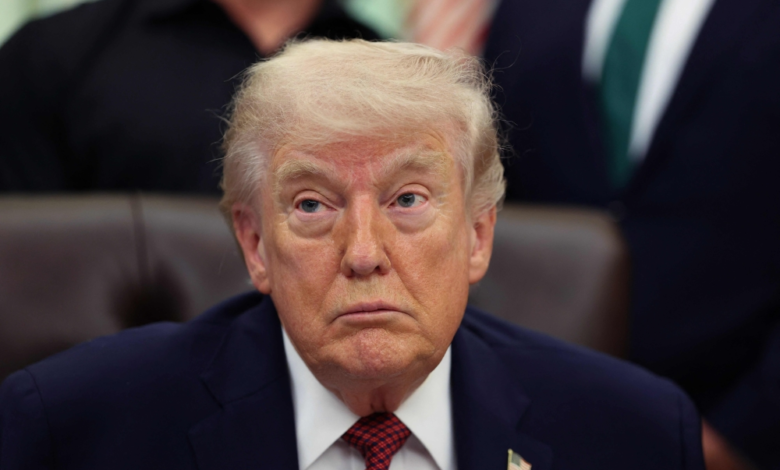
Trump accuses Iran of violating the truce | Tensions escalate in the Middle East

In a new escalation of political rhetoric, former US President Donald Trump directly accused Iran of violating the ceasefire "multiple times" in a post on his Truth Social platform. This statement comes at a critical juncture as a temporary truce nears its end, raising fears that the Middle East could once again descend into a spiral of conflict and instability.
A historical context of ongoing tension
To understand the dimensions of this accusation, it is necessary to return to the general context of US-Iranian relations during the Trump presidency. That period was characterized by Washington's adoption of a "maximum pressure" policy, which effectively began with the unilateral US withdrawal from the Iran nuclear deal (the Joint Comprehensive Plan of Action) in 2018. This decision was followed by the reimposition of harsh and comprehensive economic sanctions aimed at crippling the Iranian economy and forcing Tehran back to the negotiating table to reach a new, more stringent agreement encompassing its missile program and regional policies. This policy led to an unprecedented escalation of tensions in the Gulf region, including incidents targeting oil tankers and downing drones, and brought the two countries to the brink of direct military confrontation on more than one occasion.
The importance of the accusation and its potential effects
Trump’s accusation that Iran violated a ceasefire, even an informal or limited one, carries serious implications on several levels. Domestically, it reinforces his administration’s narrative that Iran is an unreliable and unnecessarily negotiating partner, thus justifying the continuation of the pressure campaign. Regionally, such accusations exacerbate mistrust between Iran and its neighbors and could be used as a pretext to bolster the US military presence in the region or to encourage regional allies to adopt a more hardline stance toward Tehran. They also threaten to undermine any fragile diplomatic efforts aimed at de-escalating proxy conflicts in areas such as Yemen and Syria.
International and economic repercussions
Internationally, this escalation is viewed with concern by other major powers, particularly European countries that have strived to preserve the nuclear agreement. The failure of any de-escalation and the return of tensions weaken diplomacy as a tool for conflict resolution and increase the risk of nuclear proliferation. Economically, any indication of a collapse of the ceasefire in the Middle East would have an immediate and negative impact on global energy markets. The Gulf region is a vital corridor for more than a third of the world's seaborne oil supply, and any threat to freedom of navigation in the Strait of Hormuz could lead to a sharp rise in oil prices, affecting the entire global economy. Therefore, Trump's statement is not merely a political disagreement, but rather an indication of the continued uncertainty that hangs over one of the world's most strategically important regions.