Meteorological Authority: Temperatures to reach 47 degrees Celsius during Hajj season

Weather forecast for the Hajj season
The National Center for Meteorology announced that temperatures during this year's Hajj season are expected to rise significantly, reaching up to 47 degrees Celsius in Mecca and the holy sites. This warning presents pilgrims and organizers with climatic challenges requiring exceptional preparations to ensure the safety of the pilgrims and the smooth and easy performance of their rituals, while avoiding the health risks associated with extreme heat.
General context and historical background of the Hajj climate
Hajj, the fifth pillar of Islam, attracts millions of Muslims annually from around the world. Since the Islamic calendar is based on lunar months, the timing of Hajj shifts each year relative to the Gregorian calendar, falling approximately 10 to 11 days behind. In recent years, Hajj coincides with the peak of summer in Saudi Arabia, a region known for its arid and extremely hot desert climate.
Historically, high temperatures have posed a significant challenge, prompting Saudi authorities over the decades to develop extensive and innovative infrastructure to mitigate the effects of the heat. These developments have included installing thousands of water misting columns in the courtyards of the Grand Mosque in Mecca and the walkways of the holy sites, providing air-conditioned and fire-resistant tents in Mina, and shading main pedestrian routes to protect pilgrims from direct sunlight.
The importance of the event and its expected impact locally and internationally
Domestically, these weather forecasts have prompted a mobilization of all government and private sectors in the Kingdom. The Saudi Ministry of Health is increasing the readiness of its hospitals and field health centers in Mecca, Medina, and the holy sites, with a particular focus on emergency departments to deal immediately with cases of heat exhaustion and sunstroke. Civil defense forces and security agencies are also intensifying their efforts to manage crowds in ways that prevent overcrowding in open areas and facilitate the movement of traffic and pedestrians.
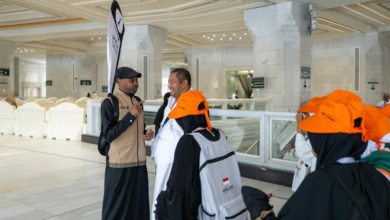
At the regional and international levels, the impact of these warnings extends to Hajj missions from around the world. Ministries of Religious Endowments and Islamic Affairs in Muslim countries launch intensive awareness campaigns for their pilgrims before their departure, emphasizing the importance of adhering to health guidelines. These guidelines include the necessity of drinking sufficient amounts of water and fluids to replenish what the body loses, using light-colored sun umbrellas, and avoiding direct sun exposure, especially during peak hours, which typically extend from 10:00 AM to 4:00 PM.
Health and safety guidelines to ensure the safety of pilgrims
Under these harsh climatic conditions, experts and doctors recommend getting sufficient rest, avoiding excessive physical exertion, and strictly adhering to the instructions of health and security guides. Pilgrims are also advised to maintain personal hygiene to avoid illnesses related to high temperatures and overcrowding. The success of the Hajj season under these climatic challenges depends largely on the individual awareness of the pilgrim and their adherence to instructions, in addition to the tremendous efforts made by the relevant authorities to provide a safe and healthy environment befitting the guests of God.