
Erdogan warns: The Middle East conflict threatens Europe's stability and its repercussions could be catastrophic
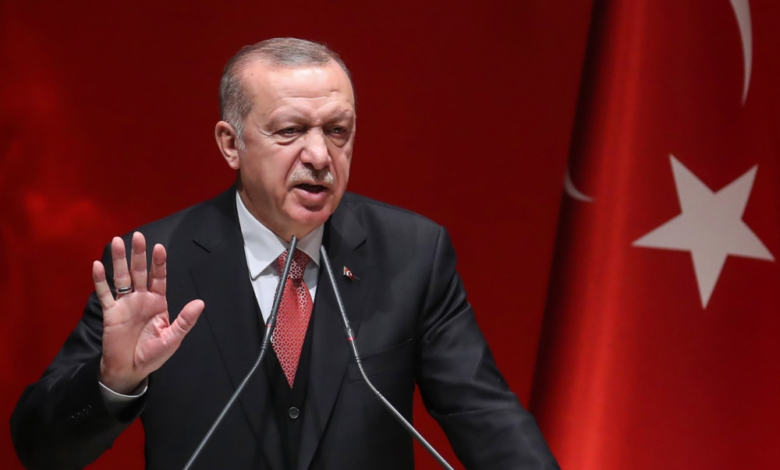
Turkish President Recep Tayyip Erdoğan issued a strong warning to the international community, asserting that the ongoing war in the Middle East has already begun to weaken the European continent. This came during a telephone conversation with his German counterpart, Frank-Walter Steinmeier, in which Erdoğan stressed the need for a diplomatic approach that serves peace, warning that “the damage caused by the conflict will be much greater” if urgent and effective intervention does not occur.
Background of tension and context of warning
The Turkish president's remarks come at a critical juncture for the Middle East, where tensions have reached a boiling point following a series of escalating events. The latest crisis began with the Israeli attack on the Iranian consulate in Damascus, which killed senior commanders of the Iranian Revolutionary Guard. In response, Iran launched an unprecedented attack with hundreds of drones and missiles against Israel, bringing the region to the brink of a wider regional war. In this context, Turkey, with its strategic geopolitical position as a NATO member and neighbor to key conflict zones like Syria and Iraq, is seeking to play a mediating role and call for restraint to prevent the region from descending into chaos.
Expected impacts on Europe: economic and security dimensions
Erdogan's warning is not unfounded. Europe is inextricably linked to the Middle East through numerous economic, security, and political channels. Economically, any military escalation in the region threatens global energy supplies, as a significant portion of the world's oil and gas transits the Strait of Hormuz. Any disruption to these vital shipping lanes will inevitably lead to higher energy prices in Europe, exacerbating inflationary pressures on economies that have yet to fully recover from the energy crisis triggered by the war in Ukraine. Furthermore, attacks targeting shipping in the Red Sea have already impacted global supply chains, driving up transportation costs and jeopardizing the stability of international trade, on which Europe heavily relies.
From a security perspective, the conflict raises concerns about new waves of migration and asylum-seeking toward Europe, which could create social, political, and economic challenges for European countries. Furthermore, instability in the Middle East provides fertile ground for the growth of extremist organizations, increasing the risk of terrorist attacks on European soil. This is in addition to the sharp political polarization the conflict is generating within European societies, threatening social cohesion and internal stability.
Türkiye's diplomatic stance and its role in NATO
As part of its diplomatic efforts, President Erdoğan, during a meeting with outgoing NATO Secretary General Mark Rutte, affirmed that Turkey has “stood on the side of peace and diplomacy” since the beginning of the crisis. He emphasized the importance of maintaining transatlantic ties, calling on European NATO allies to assume greater responsibility in defense initiatives. Erdoğan criticized the exclusion of non-EU European allies from recent defense initiatives, arguing that this would be counterproductive and detrimental to the security of the alliance as a whole. For his part, Rutte affirmed that NATO remains committed to the defense of Turkey, a vital member of the alliance.