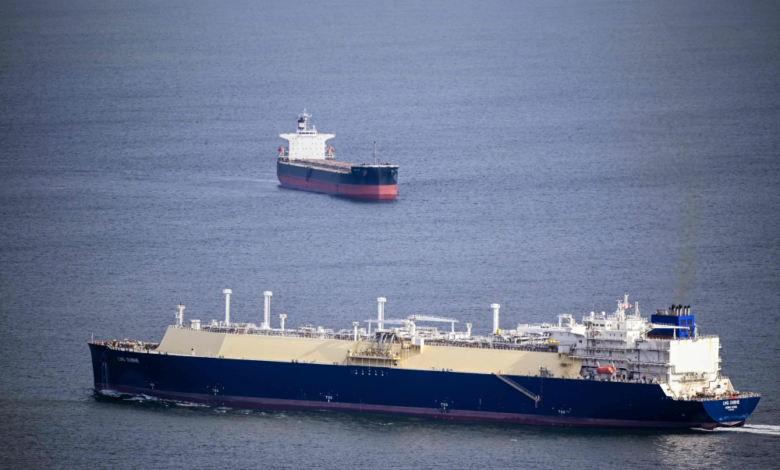
Iran exempts Iraqi ships from restrictions on crossing the Strait of Hormuz

Amid escalating geopolitical tensions in the Middle East, Iranian authorities announced a strategic decision regarding maritime navigation on Saturday. Tehran affirmed that Iraqi vessels have the full right to transit the Strait of Hormuz freely and without any navigational restrictions. This announcement comes as Iran maintains a near-total blockade of this vital strategic waterway since the outbreak of the last war in the region.
In detailing the decision, Ebrahim Zolfaghari, the official spokesperson for the Khatam al-Anbiya Headquarters, which serves as the central operations room for the Iranian Armed Forces, stated in an official statement read in Arabic: “We hereby declare that our brotherly Iraq is exempt from any restrictions we have imposed in the Strait of Hormuz, as these restrictions apply only to hostile states.” This statement clearly reflects the nature of regional alliances and Iran’s discriminatory treatment of neighboring countries based on their political stances.
The strategic importance of the Strait of Hormuz and its historical background
is The Strait of Hormuz one of the world's most important and sensitive waterways. Connecting the Persian Gulf, the Gulf of Oman, and the Arabian Sea, it is a vital artery for global energy supplies. Historically, nearly one-fifth of the world's crude oil production, along with vast quantities of liquefied natural gas, has passed through this narrow strait. Iran has long used its strategic location overlooking the strait as a political and military bargaining chip in the face of international sanctions or external threats, repeatedly threatening to close it or restrict navigation during times of crisis.
Impact of the decision on Iraqi-Iranian relations
On both the domestic and bilateral levels, this exception underscores the depth of the political and economic ties between Tehran and Baghdad. Iraq relies almost entirely on exporting its oil through its southern ports in Basra, which require tankers to transit the Strait of Hormuz to reach global markets. The exemption for Iraqi vessels ensures the stability of the Iraqi economy, which is heavily dependent on oil revenues, and confirms Iran's commitment to avoiding any actions that could harm the interests of its allies in the region amidst the ongoing conflict.
Regional and international repercussions of navigation restrictions
Regionally, the Iranian decision sends a clear message to other Gulf states and the international community that Tehran controls maritime security based on its classification of countries as “friendly” or “hostile.” This categorization could increase anxiety among neighboring countries that rely on the Strait for exporting their resources.
On the international level, any restriction on navigation in the Strait of Hormuz, even if partial or targeting specific countries, automatically leads to uncertainty in global energy markets. Oil prices typically react swiftly to such developments, as major consuming nations fear supply disruptions. These actions also prompt major powers to bolster their naval presence in the region to ensure freedom of navigation, increasing the likelihood of direct military confrontation.
In conclusion, the Iranian announcement regarding the Iraqi ships represents an important development in the course of current events, as it combines securing the interests of allies and using geopolitics as a tool in the wider regional conflict, keeping the Strait of Hormuz at the center of global attention as a flashpoint that could ignite at any moment.