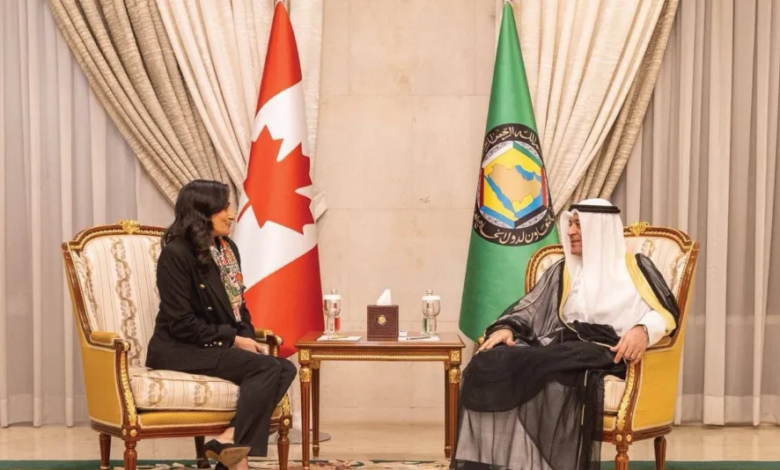
Canada affirms its support for the Gulf states in confronting Iranian aggression

Canada reaffirms its commitment to the security of the Arabian Gulf
In a move reflecting its deep commitment to international security and stability, Canada has expressed its strong and continued support for the Gulf Cooperation Council (GCC) countries in the face of repeated Iranian threats and attacks targeting the region's security. This Canadian stance is consistent with Western policies aimed at curbing Iran's destabilizing influence in the Middle East and underscores the importance of protecting vital waterways and ensuring freedom of navigation, which is a cornerstone of the global economy.
Historical background of Canadian-Iranian relations
To understand Canada’s current position, it is necessary to consider the historical context of relations between Ottawa and Tehran, which have witnessed escalating tensions over the past decade. In 2012, Canada made the decisive move of severing diplomatic ties with Iran, closing its embassy in Tehran, and expelling Iranian diplomats, designating Iran as a leading state sponsor of terrorism. These tensions intensified significantly following the tragic downing of Ukraine International Airlines Flight 752 by the Iranian Revolutionary Guard Corps (IRGC) in January 2020, which killed all passengers and crew, including dozens of Canadian citizens and residents. More recently, Canada has further solidified its stance by designating the IRGC as a terrorist organization, reflecting a legal and political escalation against Tehran’s policies.
The nature of Iranian threats in the region
The various forms of Iranian aggression and threats are a source of concern for both the international community and the Gulf Cooperation Council (GCC) states. These threats include support for armed militias and proxies in the region, such as the Houthi group in Yemen, which has launched repeated ballistic missile and drone attacks on vital civilian and oil infrastructure. Furthermore, Iranian interference in the affairs of Arab states and the ongoing threats to maritime security in the Strait of Hormuz pose a direct challenge to regional security. Canada's position is a firm rejection of these practices, affirming the right of the Gulf states to defend their sovereignty and national security.
The strategic and economic importance of Gulf security
The impact of tensions in the Arabian Gulf region extends far beyond the local or regional level, reaching the entire global economy. The Gulf is a primary source of global energy, and a significant portion of the world's oil and gas supply passes through the Strait of Hormuz. Any Iranian threat or aggression in this sensitive region leads to fluctuations in global energy prices, negatively impacting inflation and economic growth rates in various countries, including Canada and Western nations. Therefore, Canada's support for the Gulf states also stems from a deep understanding of the importance of stabilizing global energy markets and safeguarding international trade routes.
International influence and coordination of positions
Internationally, Canada's supportive stance towards the Gulf states aligns with that of its strategic allies, most notably the United States and European countries. This international coordination creates a unified front aimed at exerting maximum diplomatic and economic pressure on Tehran to comply with international laws and norms. This support also strengthens the effectiveness of international alliances concerned with protecting maritime navigation in the Arabian Gulf and the Red Sea, and underscores that Gulf security is an integral part of global national security.
In conclusion, Canada’s support for the Gulf states in the face of Iranian aggression sends a clear message that the international community will not tolerate destabilizing activities. By strengthening security and economic partnerships with the Gulf Cooperation Council (GCC) countries, Canada is contributing to a more secure and stable regional environment, which in turn has a positive impact on international peace and security.