
A promising partnership to boost “Taif liquid gold”
In a strategic move aimed at promoting one of the most important agricultural and cultural treasures in the Kingdom of Saudi Arabia, the Ministry of Environment, Water and Agriculture office in Taif Governorate received a high-level delegation from the Food and Agriculture Organization of the United Nations (FAO). The visit focused on exploring ways to develop the Taif rose sector and examining opportunities to enhance its sustainability and competitiveness both locally and internationally.
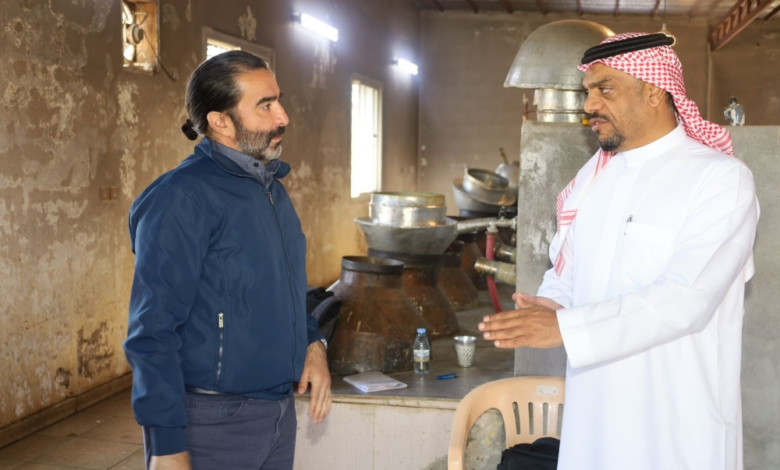
The visit included extensive field tours, during which the delegation closely observed rose farms and both traditional and modern distillation facilities. The international experts monitored all stages of production, from the meticulous early morning rose picking process, through weighing and sorting, to the complex distillation process that yields the precious aromatic rose oil and pure rose water.
Taif roses: a historical legacy and economic value
The Taif rose, scientifically known as Rosa damascena trigentipetala, is more than just an agricultural product; it is an integral part of the identity and history of the city of Taif. Its cultivation has flourished for centuries in the Sarawat Mountains, at altitudes exceeding 1,800 meters above sea level, where it is believed the Ottomans introduced it. The temperate climate and fertile soil have endowed this rose with a unique and potent fragrance, making it one of the most expensive and finest roses in the world, and it is used in the production of some of the world's most luxurious perfumes.
The annual Taif Rose Festival is a prominent cultural and tourist event, attracting visitors from within the Kingdom and abroad, reflecting the deep importance of this product in the social and economic fabric of the region.
Expected impact in line with Vision 2030
This partnership with the FAO comes at a crucial time, as its objectives align with the goals of Saudi Vision 2030, which aims to diversify national income sources and develop non-oil sectors. Developing the Taif rose sector will contribute to creating more job opportunities for local communities, supporting farmers and producers, and boosting agricultural and ecotourism in the region.
During the delegation's meetings with farmers and producers, discussions focused on the most pressing challenges facing the sector, such as water use efficiency, high production costs, and the need to improve supply and marketing chains. It is expected that FAO's expertise will provide innovative solutions through the adoption of modern agricultural technologies and the application of global best practices in sustainable resource management, thereby ensuring improved product quality and enhanced competitiveness in global markets.
This collaboration opens new horizons for transforming Taif roses from a luxury traditional product into a registered global brand, boosting the Kingdom’s exports and supporting its growing economy.