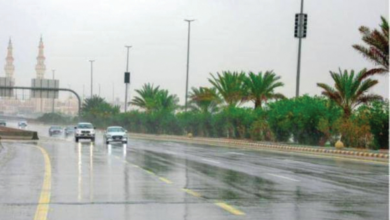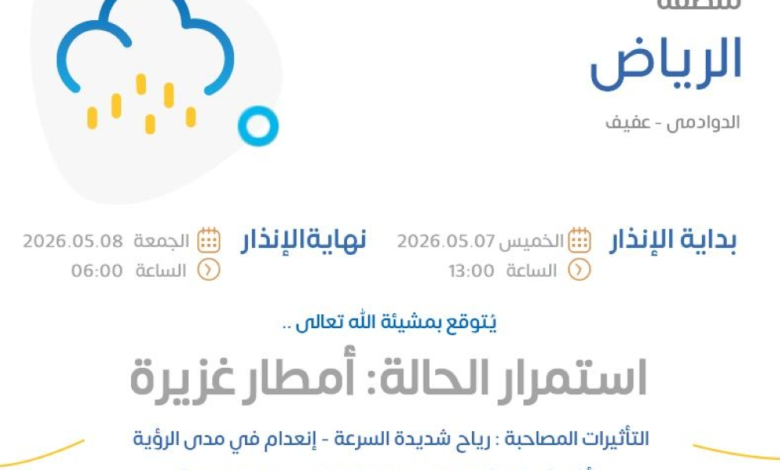

أعلن المركز الوطني للأرصاد في المملكة العربية السعودية عن تحديث حالة الإنذار في منطقة الرياض، حيث تم تمديد الإنذار الأحمر ليشمل أجزاء واسعة من المنطقة، محذراً من استمرار هطول أمطار غزيرة قد تؤدي إلى جريان السيول. ويشمل التحذير محافظتي الدوادمي وعفيف، ومن المتوقع أن تستمر هذه الحالة الجوية المتقلبة من ظهر يوم الخميس وحتى الساعة السادسة من صباح يوم الجمعة.
وأوضح المركز في بيانه أن الإنذار الأحمر، وهو أعلى مستوى في درجات التحذير، يعني توقع ظواهر جوية خطيرة. وتتضمن الحالة المتوقعة رياحاً شديدة السرعة قد تتسبب في انعدام شبه تام للرؤية الأفقية، بالإضافة إلى تساقط كثيف للبرد، وجريان للسيول في الأودية والشعاب، مع نشاط ملحوظ للصواعق الرعدية. ودعا المركز الجميع إلى أخذ أقصى درجات الحيطة والحذر والالتزام الصارم بتعليمات الجهات المختصة، وعلى رأسها الدفاع المدني، حفاظاً على الأرواح والممتلكات.
السياق المناخي وأهمية التحذيرات
تأتي هذه الموجة المطرية الشديدة في سياق التقلبات الجوية التي تشهدها المملكة العربية السعودية خلال فترات انتقالية من العام، خصوصاً في فصل الربيع. وتُعرف هذه الفترة بتزايد فرص تكون السحب الركامية الرعدية التي تحمل كميات كبيرة من الأمطار في وقت قصير. وتتميز جغرافية منطقة الرياض بوجود العديد من الأودية الجافة التي يمكن أن تمتلئ بالمياه بشكل مفاجئ وسريع، مما يشكل خطراً كبيراً على السكان والمركبات. وتكتسب هذه التحذيرات أهمية قصوى نظراً للتجارب السابقة مع السيول التي شهدتها المنطقة، والتي أكدت على ضرورة الاستعداد المسبق والاستجابة الفورية للإنذارات.
التأثيرات المتوقعة والتنسيق الحكومي
على الصعيد المحلي، يُتوقع أن تؤثر هذه الحالة الجوية بشكل كبير على الحياة اليومية في العاصمة والمحافظات المتأثرة. ومن المرجح أن تشهد الطرقات الرئيسية والداخلية ازدحاماً وارتباكاً في حركة السير، مما يستدعي من السائقين توخي الحذر الشديد. وتقوم الجهات الحكومية المعنية، مثل وزارة التعليم وإدارات المرور والدفاع المدني، بالتنسيق فيما بينها لاتخاذ الإجراءات الاحترازية اللازمة، والتي قد تشمل تعليق الدراسة حضورياً أو تحويلها عن بعد، وإغلاق بعض الطرق والأنفاق التي تشكل خطراً أثناء هطول الأمطار. كما تشدد السلطات على أهمية متابعة المواطنين والمقيمين للمستجدات عبر المنصات الرسمية للمركز الوطني للأرصاد، وتجنب نشر الشائعات أو المعلومات غير الدقيقة حول الطقس.