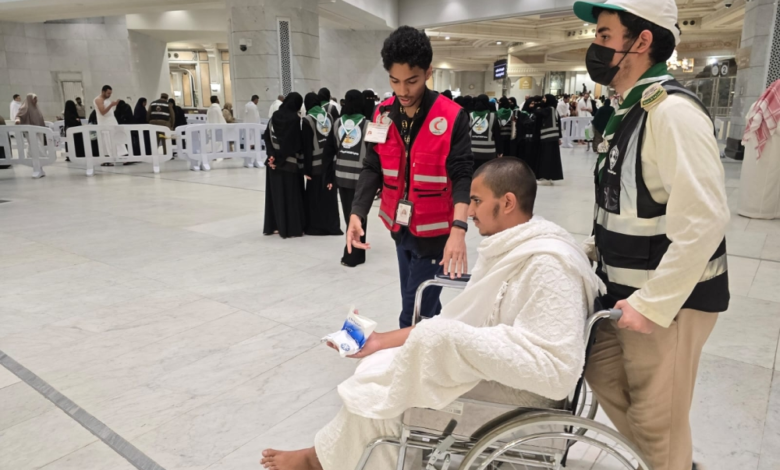

In a scene that embodies the highest meanings of giving and generosity, the Saudi Arabian Scouts Association harnessed its human energies to serve the visitors of the Two Holy Mosques, as more than 750 scouts were deployed in the courtyards of Makkah and Madinah, carrying the slogan “Messengers of Peace” to provide aid and assistance to millions of pilgrims and worshippers during the current Ramadan season.
A historical legacy in serving pilgrims and Umrah performers
This scouting presence is not a recent development, but rather an extension of the long history of Saudi scouting, which has been a cornerstone of the Hajj and Umrah seasons for decades. This year's participation is particularly significant as it falls under the umbrella of the global scouting project "Messengers of Peace," which originated in Saudi Arabia to carry a message of peace and love to the entire world, underscoring the Kingdom's leading role in humanitarian and volunteer work.
Field missions and high-level security support
The role of scouts has transcended the traditional concept of volunteering to become an integral part of the security and organizational system at the Two Holy Mosques. The most prominent tasks entrusted to these young people include:
- Crowd management: Effectively contributing to organizing the flow of worshippers and pilgrims in crowded corridors and squares to ensure smooth movement.
- Security support: Standing side by side with the "Special Forces for Hajj and Umrah Security" and supporting security patrols in the central area.
- Guidance and orientation: Guiding lost people and assisting the elderly and people with special needs, in cooperation with the General Authority for the Care of the Affairs of the Grand Mosque and the Prophet’s Mosque.
A well-planned geographical distribution and institutional integration
According to the approved operational plan, personnel have been meticulously deployed to ensure coverage of vital locations, with over 400 scouts carrying out their duties in Mecca and more than 350 in Medina. This effort is the result of fruitful collaboration between several key sectors, including the Ministry of Education, Saudi universities, the Technical and Vocational Training Corporation, and the Ministries of Human Resources and Sports, reflecting exemplary national integration.
Volunteering and the Kingdom's Vision 2030
These volunteer efforts directly contribute to the goals of the Kingdom's Vision 2030, which aims to reach one million volunteers annually. Through their commitment and discipline, these young people set a commendable example of responsible citizenship, enhancing the experience of pilgrims and providing a safe and convenient environment for performing the rituals, thus reinforcing the Kingdom's position as the heart of the Islamic world and the custodian of the Two Holy Mosques.