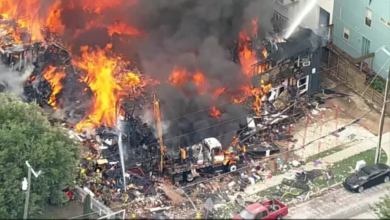
Escalating war: Russia warns foreigners and intensifies its strikes on Kyiv

Tensions escalate: Russia warns foreigners and diplomats in Kyiv
In a dangerous escalation reflecting the intensifying conflict, Russian authorities announced their intention to launch further intensified military strikes on the Ukrainian capital, Kyiv. The threats extended beyond military infrastructure to include explicit statements about targeting "decision-making centers." In an unprecedented move, Moscow urged all foreign nationals and diplomats in Kyiv on Monday to leave immediately, signaling an imminent military escalation that could alter the existing rules of engagement and place diplomatic missions in danger.
General context and historical background of the Russian-Ukrainian war
The roots of this escalation lie in the Russian invasion of Ukraine, which began in late February 2022. At the start of the war, Russian forces attempted to advance on the capital, Kyiv, to seize control and overthrow the government. However, Ukrainian resistance, supported militarily and logistically by Western countries, forced them to retreat and concentrate on the eastern and southern regions. Since then, the war has transformed into a protracted war of attrition, heavily reliant on missile and drone attacks targeting critical infrastructure and power plants, resulting in successive humanitarian and economic crises affecting millions of civilians.
Exchange of blows: Kyiv targeted in exchange for Belgorod and Bryansk
The latest Russian warnings come in the wake of a series of cross-border attacks. Overnight Saturday and into Sunday, Russian forces launched heavy shelling of the capital, Kyiv, killing at least four people and injuring more than 100, according to official Ukrainian figures. This intense bombardment reflects Moscow’s strategy of maintaining pressure on the Ukrainian leadership and disrupting daily life in the capital.
In response, Ukraine did not remain idle, launching strikes deep inside Russia, specifically in the border regions of Belgorod and Bryansk. These Ukrainian attacks resulted in the deaths of two people. According to a statement from Belgorod authorities, a drone attacked a car in the town of Hrayvoron, killing a civilian. The acting governor of the Bryansk region, Yegor Kovalchuk, also announced via Telegram that a man was killed in a Ukrainian strike on the town of Belaya Berezka. These tit-for-tat attacks confirm that the conflict is expanding to include civilian areas and sensitive border regions on both sides.
The importance of the event and its expected impact locally and internationally
Domestic impact: Within Ukraine, targeting decision-making centers and threatening to bomb the capital are placing immense pressure on the Ukrainian government and its citizens. This escalation is exacerbating the suffering of civilians, deepening the internal displacement crisis, and further weakening already extensively damaged infrastructure, making recovery efforts even more complex.
Regional and International Impact: Russia’s call for foreign diplomats to leave Kyiv carries serious political and military messages for the international community. This move is understood as a direct warning to Western countries supporting Ukraine that their embassies and representatives may not be safe from future attacks. Regionally, this escalation increases the state of alert in Ukraine’s neighboring countries, such as Poland and Romania, and presents NATO with new challenges regarding how to protect its allies and support Kyiv without being drawn into a direct and full-scale military confrontation with Moscow. Moreover, the continuation and escalation of this war casts a long shadow over the global economy, particularly concerning the stability of energy markets and global food supply chains.