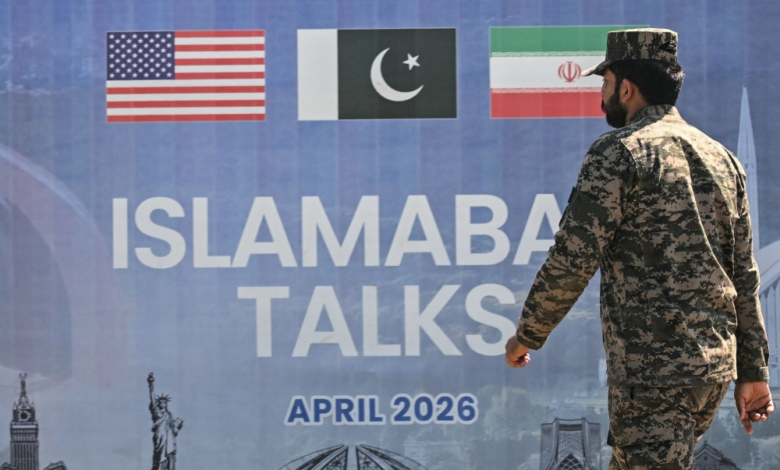

First Iranian comment on the Pakistan talks
In a striking diplomatic development reflecting the complexities of the political landscape, the Iranian Foreign Ministry confirmed that reaching a comprehensive agreement in a single round of negotiations with the United States was entirely unexpected. This official statement came after the latest round of talks between Washington and Tehran , hosted by the Pakistani capital Islamabad, concluded without any significant breakthrough, further highlighting the deep divide between the two countries.
Details of the official statement from Tehran
The Iranian state broadcaster IRIB quoted Foreign Ministry spokesman Esmail Baghaei explaining his country's position on this round of talks. Baghaei stated, "Naturally, from the outset, we shouldn't have expected to reach a final and decisive agreement in just one session. No one in diplomatic circles anticipated this given the accumulation of disagreements." The Iranian spokesman emphasized the continuation of the diplomatic process, adding that Tehran is "confident that communication between us and Pakistan, and with our other friends in the region, will continue and will not end at this point.".
Historical context: The crisis of confidence and the nuclear agreement
These developments come against a backdrop of historical tensions and mistrust between the United States and Iran. Since Washington’s unilateral withdrawal from the nuclear agreement (the Joint Comprehensive Plan of Action) in 2018 and the reimposition of harsh economic sanctions on Tehran, relations between the two countries have steadily deteriorated. Several international and regional actors, such as Oman and Qatar, have attempted to mediate and bridge the gap, but the contentious issues extend beyond the nuclear program to include regional influence and economic sanctions, making any direct or indirect dialogue a difficult and protracted process.
The importance of Pakistani mediation
Pakistan's hosting of this round of talks is particularly significant. Islamabad shares a long land border with Iran and has complex historical ties, while simultaneously maintaining strategic partnerships with the United States. This geopolitical position qualifies Pakistan to play the role of mediator or facilitator of dialogue during times of crisis, especially when traditional channels reach an impasse. The continued Iranian-Pakistani engagement underscores Tehran's desire to keep communication channels open to avoid diplomatic isolation.
Expected regional and international impact
Regionally and internationally, the failure of this round of negotiations between Washington and Tehran significant implications, especially given the current circumstances in the Middle East. The region is witnessing unprecedented escalation and heightened security tensions, making any rapprochement between the US and Iran an urgent necessity to prevent the region from sliding into a wider conflict. The international community is cautiously monitoring these developments, as the continued stalemate could have negative repercussions on global energy markets and maritime navigation, in addition to its direct impact on the stability of neighboring countries.
The future of diplomatic relations
In conclusion, the path to negotiations between Washington and Tehran appears to remain long and fraught with obstacles. The Iranian Foreign Ministry's statements reflect a political realism that recognizes that resolving decades of hostility cannot be achieved with the stroke of a pen or in a single meeting. Hope remains pinned on future rounds of talks and the continued diplomatic efforts of allies and regional mediators to find common ground that guarantees a minimum level of stability in one of the world's most volatile regions.