Combating desert locusts in Saudi Arabia: Proactive efforts to protect food security

In a proactive step aimed at protecting agricultural resources and enhancing sustainable food security, the National Center for Plant Pest and Animal Disease Prevention and Control (Wiqa’) has intensified its field operations to monitor and combat desert locusts across the Kingdom. These efforts are part of an integrated system that utilizes the latest technologies, including drones, to ensure a rapid response and limit the spread of this dangerous pest.
Historical context and the threat of desert locusts
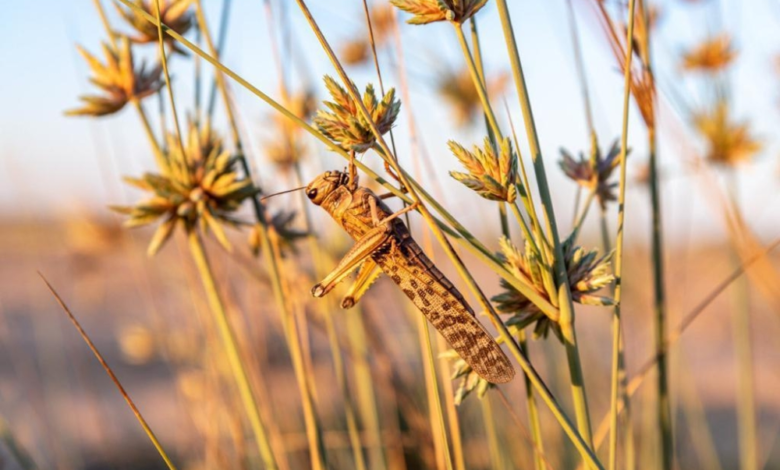
The desert locust (Schistocerca gregaria) is one of the world's most dangerous migratory pests, possessing an exceptional ability to fly long distances and reproduce rapidly, making it a historical threat to food security. Locust swarms have been mentioned in ancient texts as a symbol of agricultural devastation. A small swarm covering just one square kilometer can consume in a single day enough food to feed 35,000 people, illustrating the scale of the threat it poses to crops and natural pastures.
The importance and impact of Saudi efforts
The Kingdom's efforts are of paramount importance both domestically and regionally. Domestically, these operations contribute to protecting the agricultural sector, a cornerstone of the Kingdom's Vision 2030. Regionally and internationally, the Kingdom's geographic location makes it a first line of defense against the spread of locust swarms to neighboring countries in the Middle East and Asia. The success of these efforts depends on continuous coordination and information sharing with neighboring countries and international organizations, such as the Food and Agriculture Organization of the United Nations (FAO), to ensure a unified and effective response.
Integrated control strategy
The Weqaa Center explained that locust breeding seasons typically extend from October to April, allowing for several successive generations within a single year. Winter breeding is concentrated in the regions of Makkah, Madinah, Tabuk, Jazan, Asir, and Al-Baha, while in the spring it spreads to Riyadh, Qassim, Hail, and Al-Jawf. The center noted that improved environmental conditions, particularly increased rainfall, provide a fertile environment for the rapid reproduction of these insects. To combat this threat, an integrated system is activated, encompassing seasonal forecasting, early warning systems, and the use of drone technology for precise monitoring and control operations, ensuring greater efficiency and a smaller environmental impact.
Readiness and invitation to community participation
The center affirmed the complete readiness of its personnel and the availability of the necessary logistical supplies to ensure the sustainability of operations. Supervisory leaders emphasized the importance of rapid intervention before the pest spreads, through well-planned operational strategies based on international coordination. Within the framework of agricultural extension, the center urged farmers to raise awareness, continuously monitor their fields, and immediately report any locust sightings, especially in their crawling stage (the young locusts), as they lay their eggs in the sandy soil near vegetation. This facilitates control efforts in their early stages and prevents the formation of destructive flying swarms.