Saudi Arabia leads the regional network for wild seeds to combat desertification

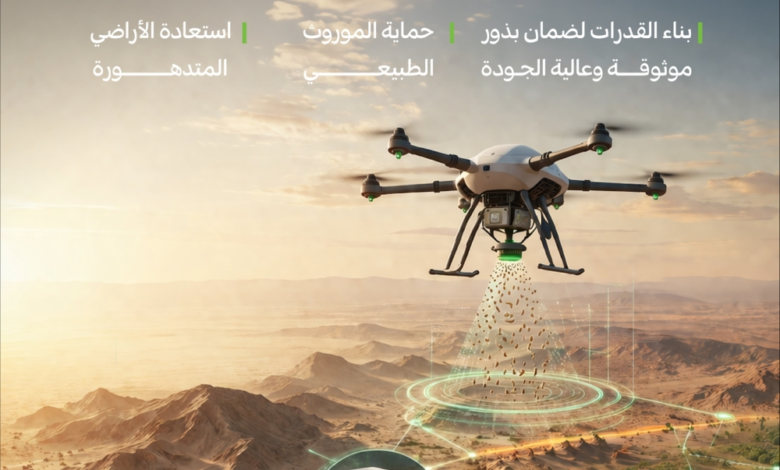
In a strategic move reflecting the Kingdom of Saudi Arabia’s commitment to environmental protection and sustainability, the National Center for Vegetation Development and Combating Desertification announced the launch of the “Regional Network for Wild and Range Seeds.” This significant announcement came during the Kingdom’s participation in the first International Symposium on Ranges and Pastoralists (RanPasS1), held in the Republic of Tunisia. The network aims to be an advanced scientific and practical platform dedicated to the conservation and management of plant genetic resources in the Near East and North Africa region, thereby strengthening regional efforts to combat desertification and restore degraded ecosystems.
General context and Saudi green initiatives
This announcement cannot be separated from the broader context of recent Saudi environmental efforts. Since launching the Saudi Green Initiative and the Middle East Green Initiative, the Kingdom has set ambitious goals of planting billions of trees and rehabilitating millions of hectares of degraded land. Wild and pastoral seeds are the cornerstone of these initiatives' success, as cultivating vast areas in arid and semi-arid environments requires a massive supply of high-quality seeds resistant to harsh climatic conditions—something the new network aims to provide according to the highest scientific standards.
The importance of the event and international support
The launch of this regional network coincides with global preparations for the “International Year of Pastures and Pastoralists 2026.” To ensure the success of this initiative, the network has relied on technical and technological support from leading international organizations and centers specializing in arid environments. This support includes the Food and Agriculture Organization of the United Nations (FAO) and the United Nations Environment Programme (UNEP), as well as a select group of international agricultural research centers. This strategic alliance provides the network with a solid scientific foundation for developing seed collection, processing, and storage technologies, and for improving ecosystem management in fragile environments affected by climate change and rising temperatures.
Al-Jawf and Hail: Local leadership with regional influence
At the local and operational level, the Rangeland Research and Development Center in Al-Jawf region is expected to become the regional network's headquarters. This will be achieved by leveraging the advanced technical capabilities of the Rangeland Seed Multiplication Center in Hail region. This integration across the Kingdom's regions aims to transfer Saudi Arabia's successful experience in plant resource management to a broader regional scale. This approach seeks to unify technical standards among member states, strengthen the scientific research system, and build specialized capacities for human resources, thereby contributing to the provision of reliable, high-quality seeds.
Expected impact and protection of biodiversity
The launch of the Regional Network for Wild and Pastoral Seeds has profound implications on several levels. Locally, it will contribute to accelerating afforestation, stabilizing soil, and reducing dust storms. Regionally, it will provide a cooperative framework for countries in the Middle East and North Africa to address shared climate challenges. Internationally, it highlights the Kingdom's role as a leading force in achieving the United Nations Sustainable Development Goals.
In this context, the National Center for Vegetation Development extended an open invitation to various countries and international organizations to join this pioneering initiative. Working under a shared, integrated framework is the best way to protect biodiversity and enhance food and water security, especially in light of the accelerating climate challenges facing the region and the world. Restoring ecological balance through this network is a pivotal step towards ensuring a sustainable future for generations to come.