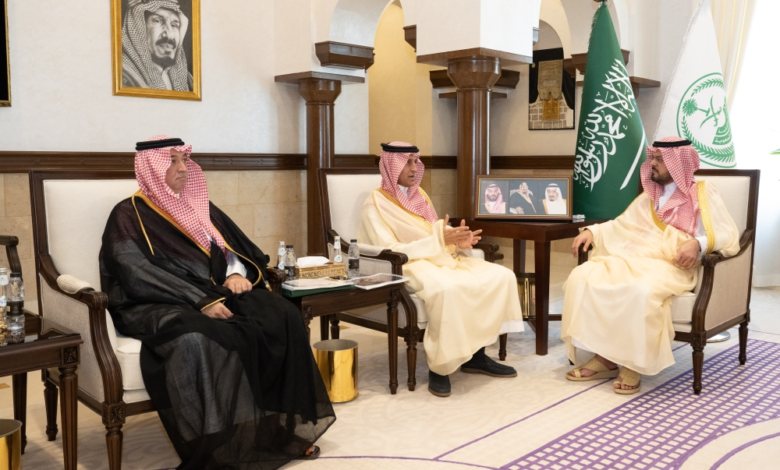
Deputy Governor of Makkah follows up on the development of 9 urban destinations that will provide 80,000 units

The Deputy Governor of Makkah inspects the latest housing and urban development projects
In a move reflecting the Saudi leadership's commitment to meeting citizens' aspirations and providing suitable housing, His Royal Highness Prince Saud bin Mishaal bin Abdulaziz, Deputy Governor of Makkah Region, received senior officials from the National Housing Company at the Governorate headquarters in Jeddah. The meeting included the company's CEO, Mr. Mohammed Al-Bati, and the General Manager for the Western Region, Mr. Nidal Alam. This strategic meeting focused on reviewing the latest developments related to urban development projects in Makkah and Jeddah, which represent a significant leap forward for the Saudi housing sector.
Details of the 9 urban destinations and their geographical distribution
His Royal Highness the Deputy Governor of Makkah reviewed the National Housing Company's plans, which include the development of nine massive urban destinations designed according to the highest international urban planning standards. These projects aim to inject more than 80,000 new housing units into the region's real estate market. These strategic projects are distributed across vital locations, with Jeddah Governorate receiving the largest share through prominent projects such as "Al-Wareef," the largest in the region, in addition to "Jeddah Heights," "Sadaim," "Al-Jawhara," "Khayala," "Al-Saddan," and "Al-Jana." In the Holy City of Makkah, efforts are concentrated around the "Makkah Gate" and "Makkah Hills" destinations, ensuring broad geographical coverage that meets the needs of the population density in these major cities.
General context: The projects' connection to Saudi Vision 2030
These accelerated steps come within the broader context of the Housing Program, one of the key programs of Saudi Vision 2030, launched by His Royal Highness the Crown Prince. Historically, the Kingdom's housing sector has undergone radical transformations. After focusing on providing land or individual loans, the national strategy has shifted towards building "integrated residential communities," or what are known as urban destinations. This shift aims to increase homeownership among citizens to 70% by 2030, while ensuring high-quality construction and providing a healthy, sustainable environment that meets the demands of the modern era.
A vibrant, integrated environment and an unprecedented quality of life
The meeting's outcomes clarified that the focus extends beyond simply constructing residential units; it encompasses creating a vibrant and integrated environment. These destinations are distinguished by their modern designs and comprehensive infrastructure planning. The National Housing Company has ensured the provision of all necessary service and commercial facilities, and has allocated strategic locations for schools, health centers, and public services. To enhance the "Quality of Life" program, these projects feature expansive green spaces and parks exceeding 1.8 million square meters, along with extensive networks of pedestrian walkways and jogging tracks that encourage a healthy and active lifestyle.
The importance and expected impact of housing projects
These projects are of paramount importance and have a multifaceted impact. Locally, these destinations will help address the gap between supply and demand in the Makkah region, which is experiencing continuous demographic growth, by providing diverse housing options to suit various segments of society. Regionally and economically, the influx of thousands of housing units represents a major driver of the local economy, contributing to the revitalization of the construction sector, creating thousands of direct and indirect job opportunities for Saudi nationals, and attracting investments in the commercial and service sectors associated with these residential suburbs. The development of these urban destinations solidifies the Kingdom's position as a leading model in sustainable urban development.