Sermon at the Grand Mosque: Sheikh Maher Al-Muaiqly explains the qualities of salvation

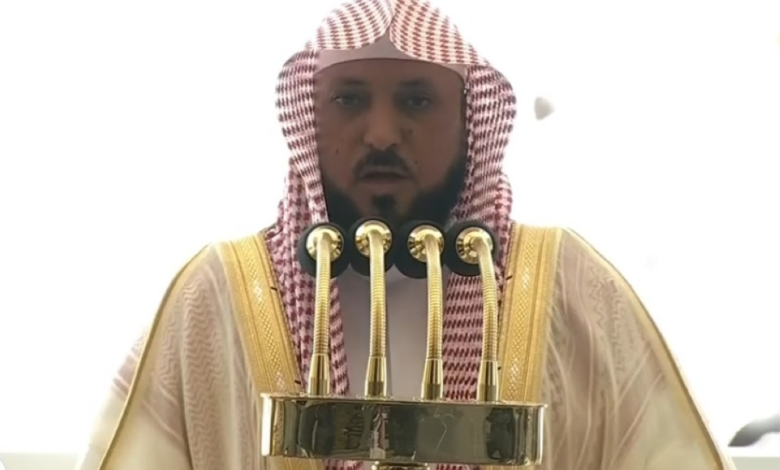
The Friday sermon from the Grand Mosque in Mecca is a focal point for millions of Muslims worldwide, serving as a global Islamic platform that delivers faith-based and ethical messages reinforcing the values of Islam. In this context, the Imam and preacher of the Grand Mosque, Sheikh Dr. Maher Al-Muaiqly, delivered a moving sermon addressing the foundations of salvation in the Hereafter, highlighting the qualities and deeds that help people escape Hellfire and attain the pleasure of God Almighty.
The importance of piety and the concept of true victory
Sheikh Maher Al-Muaiqly began his sermon by urging the congregation and the entire Muslim community to adhere to piety in private and in public. He emphasized that piety is manifested in consistent acts of obedience and abstaining from forbidden things, noting that success in this life and the hereafter belongs to those who hold fast to piety, while loss and regret await those who follow their desires and succumb to their lusts. He further clarified the true meaning of success in the Islamic perspective, explaining that the true triumph of the righteous is not limited to the fleeting pleasures of this world, but rather is their salvation from Hellfire. He affirmed that this triumph is only complete with entry into Paradise and deliverance from the torment of Hell.
The reality of the afterlife and the inevitability of destiny
In explaining the nature of the afterlife, the preacher of the Grand Mosque emphasized a fundamental Quranic truth: there is no third abode in the Hereafter; destiny is limited to either Paradise or Hell. He clarified that the path to Paradise requires striving against one's desires and persevering in acts of obedience, drawing upon the noble Prophetic understanding that Hell is surrounded by the desires to which human souls are naturally inclined, while Paradise is surrounded by hardships and trials that demand patience and perseverance. This necessitates constant vigilance and caution for Muslims against succumbing to the temptations of this life.
The most prominent qualities and deeds that save one from Hellfire
Dr. Al-Muaiqly then went on to detail a set of noble deeds that are a direct cause of salvation from Hellfire, which can be summarized in the following points:
- Maintaining the prescribed prayers: His Eminence emphasized that prayer is the pillar of religion, and that maintaining it, especially the Fajr and Asr prayers, is a great reason for salvation from Hell and entry into Paradise.
- Maintaining fasting: He explained that fasting is a shield and protection from Hellfire. He pointed out that even after the blessed month of Ramadan ends, the door to voluntary fasting remains open throughout the year to increase reward and spiritual immunity.
- Adopting good morals: The preacher explained that one of the greatest reasons for being saved from Hell is gentleness, good treatment, and kindness to people, for Islam is a religion of morals and good treatment.
- Kindness to daughters and sisters: His Eminence concluded with a refined social and humanitarian touch that affirms Islam’s honoring of women, as he explained that whoever is blessed with daughters or has sisters and treats them kindly and fears God in his dealings with them, they will be a veil and a shield for him from Hellfire, and a reason for him to enter Paradise.
The regional and international impact of the message of the Two Holy Mosques
These sermons and messages emanating from the pulpit of the Grand Mosque in Mecca hold immense importance both regionally and internationally. They not only guide the worshippers present but also extend through media outlets and simultaneous translation to reach millions of Muslims across the globe. These directives contribute to strengthening social harmony and building cohesive families by urging kindness towards women and instilling the values of tolerance and good character. They also reflect the significant efforts undertaken by the Kingdom of Saudi Arabia in serving Islam and Muslims and disseminating the moderate and balanced approach that represents the essence of the true Islamic faith.