The withdrawal of US troops from Germany and its implications for European security

German Defense Minister Boris Pistorius confirmed that the United States' decision to withdraw thousands of troops from German soil, announced under the previous US administration, was an "expected" step, while simultaneously emphasizing the need for Europe to redouble its efforts to strengthen its independent security capabilities. In a statement, Pistorius said: "The withdrawal of American troops from Europe, and from Germany as well, was expected, and we Europeans must assume greater responsibility for our own security.".
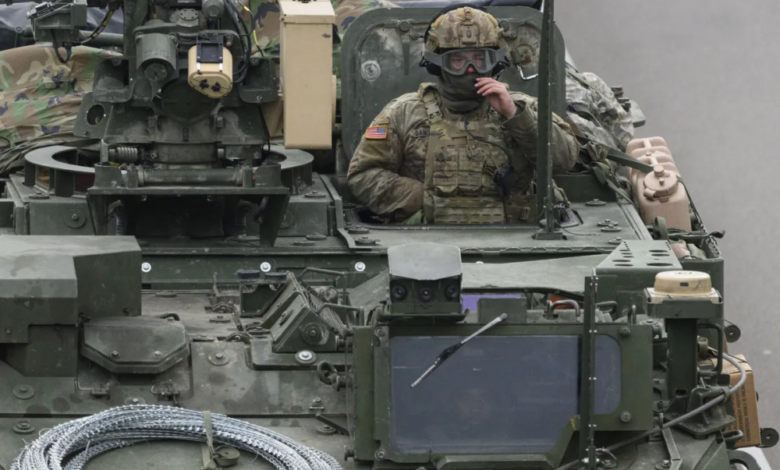
Under former President Donald Trump, the Pentagon announced plans to withdraw approximately 12,000 troops from Germany, a significant reduction in the decades-long U.S. military presence. This decision came amid political tensions between Washington and Berlin, with Trump repeatedly criticizing Germany for failing to meet its NATO commitment to spend 2% of its GDP on defense.
Historical background of the American military presence
The American military presence in Germany dates back to the end of World War II, forming a key part of the Allied strategy to contain Soviet expansion during the Cold War. Over time, these forces transformed from an occupying force to a major ally within NATO, and Germany became home to some of the most important American bases in Europe, such as Ramstein Air Base, a vital logistical hub for US operations in Europe, Africa, and the Middle East. This presence was not solely military in nature; it also involved deep economic and social ties with local German communities.
The importance and expected effects of the decision
Domestically, the withdrawal decision has sparked concern in German cities whose economies are heavily reliant on the presence of US bases and the associated spending and jobs. Regionally, the decision has sent mixed signals to NATO allies, particularly in eastern Europe, who depend on the US presence as a key deterrent against Russia. This has accelerated discussions within the European Union about the concept of “strategic autonomy,” an idea that aims to enable Europe to act independently on security and defense issues without being entirely dependent on Washington.
Internationally, many analysts viewed the US move as part of a broader shift in US foreign policy toward focusing on the Indo-Pacific region to counter China's influence and reduce direct engagement in Europe. Although the Biden administration later halted plans for a complete withdrawal, the debate sparked by the decision remains alive, prompting Europeans, particularly Germany and France, to reassess their defense strategies and invest more heavily in their combined military capabilities to ensure the continent's long-term security.