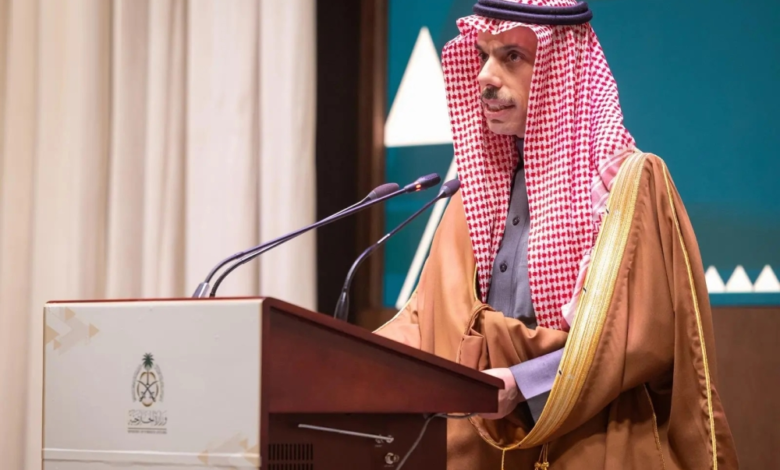

Active Saudi participation in the G7 meetings
His Highness Prince Faisal bin Farhan bin Abdullah, the Saudi Minister of Foreign Affairs, participated in an important panel discussion entitled “Reforming Global Governance” on Thursday, as part of the G7 Foreign Ministers’ Meeting and the meeting of invited partner countries. This participation underscores the pivotal role played by the Kingdom of Saudi Arabia on the international stage and its unwavering commitment to strengthening multilateral cooperation to address current global challenges.
Details of the Global Governance Reform Session
During the session, His Highness the Minister of Foreign Affairs addressed a range of international initiatives aimed at improving the efficiency and effectiveness of United Nations organizations. Discussions also focused on ways to enhance international humanitarian action by improving global supply chains, expediting mechanisms for delivering humanitarian aid to those in need in crisis zones, and strengthening coordination between donor countries and relief organizations to ensure a faster, more comprehensive, and more effective response.
General context and historical background of global governance
The importance of reforming global governance is underscored by the rapid geopolitical and economic changes the world is witnessing today. International institutions established after World War II, foremost among them the United Nations, are now facing unprecedented pressures that necessitate a comprehensive overhaul of their structures to effectively address the complex crises of the 21st century, such as climate change, global pandemics, and armed conflicts. The G7, comprising the world's leading industrialized and democratic economies, serves as a key platform for discussing these structural reforms and guiding international policies toward a more stable and equitable global order.
Local, regional and international impact
Domestically, the Kingdom’s participation in this high-level international forum is fully aligned with the objectives of Saudi Vision 2030, which seeks to solidify the Kingdom’s position as a leading investment powerhouse and a hub connecting continents, as well as its role as a peacemaker and a major supporter of global humanitarian work. Saudi Arabia’s presence at the G7 meetings underscores the international community’s confidence in its political and economic weight, particularly as it is the only Arab member of the G20.
Regionally and internationally, this event carries significant weight. The Middle East is directly affected by the effectiveness of global governance and the international community's ability to resolve conflicts and deliver aid. Improving supply chains and expediting aid delivery will directly contribute to alleviating human suffering in numerous conflict zones around the world. Furthermore, enhanced international coordination ensures that relief efforts are not duplicated and maximizes their positive impact on affected populations, thereby strengthening the prospects for achieving international peace, security, and stability.