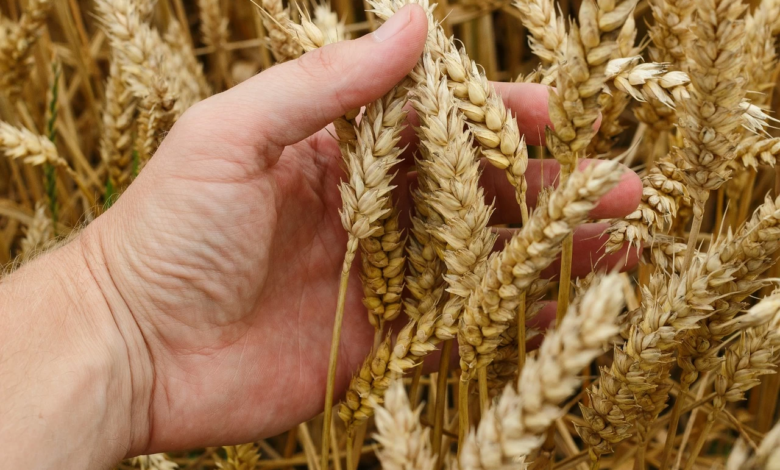

Global commodity markets have witnessed a significant surge in wheat prices, reaching their highest levels in nearly two years. This remarkable increase stems from a confluence of troubling factors, most notably the severe drought affecting key wheat-growing regions in the United States, coupled with rising production costs, particularly fertilizers, which are placing immense pressure on farmers and threatening the stability of global supplies.
Reasons for the increase: America's drought and fertilizer costs
In detail, soft red winter wheat futures on the Chicago Board of Trade rose by as much as 4.1%, reaching their highest level in 24 months. This surge is directly attributed to the deteriorating condition of wheat crops in the Great Plains, which were planted last fall and are now wilting due to a severe lack of rainfall. The U.S. Department of Agriculture (USDA) has maintained its crop classifications, with only 30% of the harvest rated as "good" or "excellent," while the percentage of wheat rated as "poor" or "very poor" has increased, indicating a pessimistic outlook for the upcoming harvest.
In addition to climatic factors, the cost of agricultural inputs plays a crucial role. High fertilizer prices, exacerbated by disruptions to global supply chains and geopolitical tensions, have led many farmers worldwide to reduce the acreage planted with nutrient-intensive crops, primarily wheat. Reports predict that global wheat production will be significantly lower than last year, with major producing countries such as Australia and Argentina expected to decrease their planted areas.
Global context: From the war in Ukraine to climate change
This crisis cannot be understood in isolation from the broader global context. Grain markets are still reeling from the lingering effects of the war in Ukraine, which disrupted supplies from the Black Sea region, often referred to as the “breadbasket of the world.” Russia and Ukraine are among the world’s largest wheat exporters, and any disruption to their production or exports sends shockwaves through global markets. Although some exports have resumed, uncertainty persists, making the market highly sensitive to any negative news from other producing regions, such as the United States.
Expected impact: A threat to global and Arab food security
This surge in wheat prices has serious implications for global food security. Wheat-importing countries, particularly in the Middle East and North Africa, will be the hardest hit. Countries like Egypt, the world’s largest wheat importer, are highly vulnerable to price volatility, which places immense pressure on their public budgets and bread subsidy programs, upon which millions of citizens depend. Higher import costs could trigger a wave of food inflation, further burdening low-income households and raising concerns about social unrest. Internationally, rising food prices contribute to higher global inflation rates, forcing central banks to adopt tighter monetary policies that could slow economic growth.