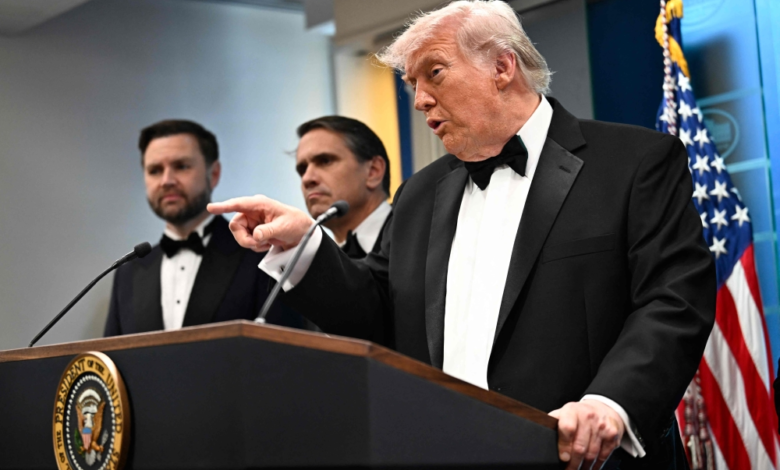

Former US President Donald Trump expressed his belief that the suspect in the shooting at the White House Correspondents' Dinner was a "lone wolf" and "mentally disturbed." These remarks came in the aftermath of the incident, as Trump sought to define the nature and motives of the attack, while simultaneously denying any possible connection to tensions with Iran and questioning the security measures at the venue.
Historical context of the White House Correspondents' Ceremony
The White House Correspondents' Dinner is a prominent annual event in Washington, D.C., bringing together leading journalists, politicians, and celebrities. Established in 1921, this tradition has become a unique platform for the U.S. president to interact with the media in a less formal setting, often delivering a humorous speech that criticizes his political opponents and the press itself. The dinner aims to raise funds for journalism scholarships and honor winners of prestigious journalism awards, making it a symbol of the complex, sometimes cooperative, sometimes adversarial, relationship between the government and the media in the United States.
The importance and impact of Trump's statements
Donald Trump’s relationship with the media during his presidency was marked by extreme tension, as he consistently labeled major media outlets as “fake news” and “enemies of the people.” He broke with long-standing presidential tradition by refusing to attend the Correspondents’ Dinner during his time in office, viewing it as a gathering of media outlets hostile to him. Therefore, his pronouncements on any incident in this context carry particular weight, reflecting his persistent view of the media and security threats. Trump’s use of the terms “lone wolf” and “mentally disturbed” carries significant political and security implications. The term “lone wolf” is used to describe perpetrators of attacks who act independently without direct affiliation to a terrorist organization. Describing an attacker as “mentally disturbed” is a common rhetorical tactic employed by some political leaders to downplay the ideological or political motivations behind an attack, portraying it as an isolated criminal act.
Security and historical significance of the site
Trump's remarks questioning the security of the Washington Hilton, which hosted the event, stirred painful historical memories. This hotel, which has hosted major political events since its opening in 1965, was the site of one of the most infamous incidents of political violence in American history: the assassination attempt against President Ronald Reagan on March 30, 1981. The incident occurred at one of the hotel's exits, giving Trump's criticisms of security a historical dimension and making them more impactful in the public debate about protecting public figures in the United States.