Development of intersections in Dhahrat Laban neighborhood, Riyadh: Details and timeline

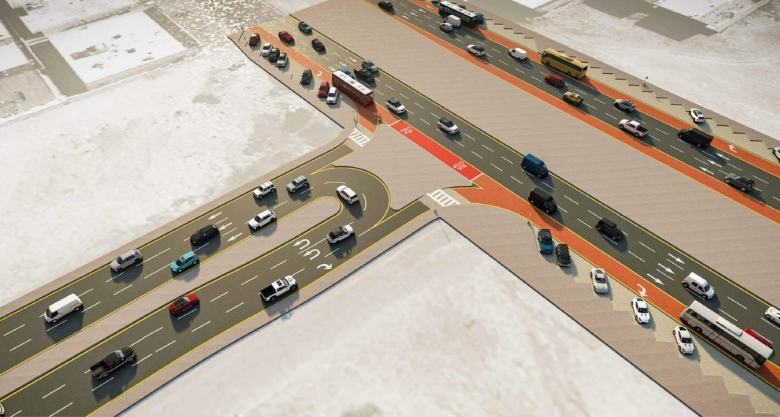
announced The Riyadh Municipality the actual commencement of engineering treatment works for three major traffic intersections located on Najd Road in the Dhahrat Laban neighborhood, as part of its strategic plan to raise the efficiency of the road network in the capital and improve the flow of traffic in densely populated neighborhoods.
Project details and targeted locations
The Secretariat explained that the development work will include improvements to the following intersections:
- The intersection of Najd Road and Taybah Road.
- The intersection of Najd Road and Tabuk Road.
- The intersection of Najd Road and Najran Road.
These works are scheduled to continue until May 16, 2026, and this step comes in response to the urgent need to regulate traffic in this vital artery that serves a large segment of the population of western Riyadh.
Context of urban expansion in western Riyadh
This project comes at a time when the Dhahrat Laban neighborhood and the western region of Riyadh are experiencing rapid urban development and a significant increase in population density. Najd Road is a key artery for daily commuting within the neighborhood, making its infrastructure development an urgent necessity to keep pace with the growing traffic volume. Historically, western Riyadh neighborhoods have witnessed substantial expansion over the past decade, necessitating continuous updates to road engineering plans to accommodate the increasing number of vehicles and prevent congestion that could negatively impact residents' daily lives.
Strategic objectives and project impact
The engineering treatment aims to achieve several gains, most notably:
- Improving traffic flow: by redesigning routes and reducing traffic conflict points, which contributes to reducing daily travel times.
- Raising safety standards: Engineering works include implementing higher safety standards to reduce traffic accidents and protect pedestrians and drivers.
- Effective connectivity: Enhancing the efficiency of connectivity between local roads and the main axes surrounding the neighborhood, thus facilitating access to and from the area.
Alignment with the Kingdom's Vision 2030
This project falls under the Quality of Life Program, one of the programs of the Kingdom's Vision 2030, which aims to improve municipal services and develop the urban landscape in Saudi cities. Through these projects, the Riyadh Municipality seeks to make the capital a people-friendly city with smart and sustainable infrastructure that serves the aspirations of both residents and visitors.
In conclusion, the Secretariat called on drivers and residents of the neighborhood to cooperate and adhere to the directional signs and temporary traffic diversions that may accompany the work period, to ensure that the project proceeds according to the specified timetable and achieves the desired benefit for all.