Details of the suppression of a march near Masoud Barzani's headquarters in Erbil

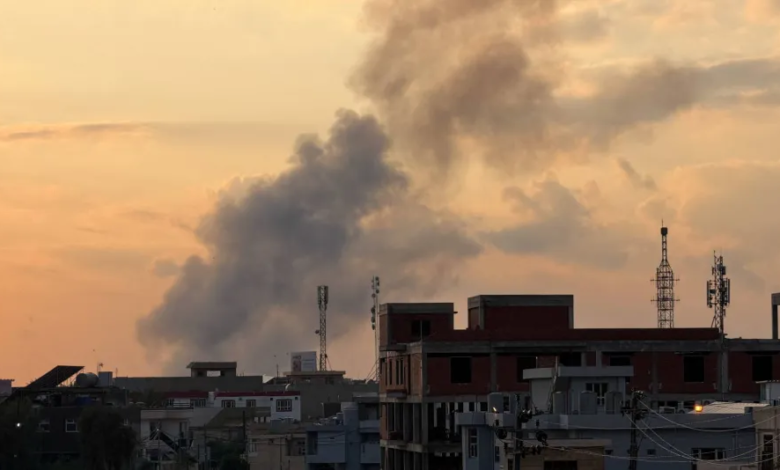
The city of Erbil, the capital of Iraqi Kurdistan, witnessed a significant security development with the downing of a drone near the residence of Kurdish leader and President of the Kurdistan Democratic Party, Masoud Barzani. This incident raises numerous questions about the nature of the attack and the parties behind it, especially given the prevailing security tensions in the region.
General context and historical background of the attacks in Erbil
This was not the first such incident targeting Erbil or the Kurdistan Region. Over the past few years, the city has been subjected to several attacks using ballistic missiles and explosive-laden drones. These attacks are often attributed to armed groups operating outside state control, aiming to destabilize the region and send multifaceted political and security messages. Historically, these attacks have targeted vital sites such as Erbil International Airport, which houses forces from the international coalition against ISIS, as well as residential areas and diplomatic missions. The use of drones has become a preferred tactic for these groups due to their difficulty in detecting and their low cost compared to other conventional weapons, posing additional challenges to air defense systems.
The importance of the event and the status of Masoud Barzani
This incident is of exceptional importance given the targeted location. Masoud Barzani is not just an ordinary political figure; he is the historical leader of the Kurdish liberation movement, the former president of the Kurdistan Region, and the head of the Kurdistan Democratic Party (KDP), the largest and most influential party in the region. Targeting the area surrounding his residence represents a dangerous escalation and a direct attempt to pressure the Kurdish political leadership. This development reflects the desire of some parties to drag the region into direct conflict and threaten the political symbolism that Barzani represents for the Kurds in Iraq and the wider region.
Expected impact at the local, regional, and international levels
At the local level, this incident is expected to trigger a large-scale security mobilization in the Kurdistan Region, with heightened security measures around sensitive locations. It also places a significant responsibility on the federal government in Baghdad to maintain security and prevent the use of Iraqi territory as a launching pad for attacks against the region. This necessitates deeper coordination between the Peshmerga forces and federal security forces to address security gaps.
At the regional level, this escalation further complicates the geopolitical landscape in the Middle East. The repeated attacks on Erbil are often linked to broader regional tensions, specifically proxy conflicts and score-settling among major regional powers. The stability of the Kurdistan Region is crucial to the stability of Iraq as a whole, and any threat to it negatively impacts neighboring countries and the entire region.
At the international level, the Kurdistan Region enjoys significant support and attention from the international community, particularly the United States and European countries. Such attacks are likely to be met with widespread international condemnation and calls for respect for Iraq's sovereignty and the protection of its institutions. This event may prompt the international coalition to bolster the region's defense capabilities and provide it with advanced systems for detecting and intercepting drones, in order to ensure the protection of its allies and international interests in the region.