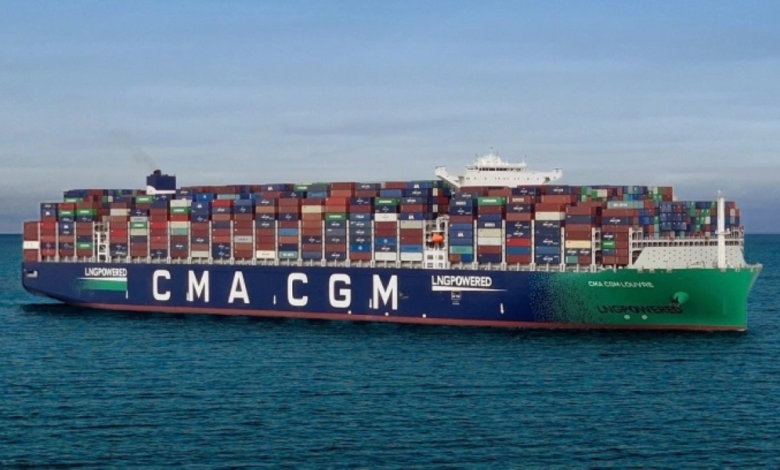

Safe passage through turbulent waters
Precise shipping data revealed that the French container ship “Saigon,” belonging to the global shipping company CMA CGM, successfully transited the strategic Strait of Hormuz and left the Arabian Gulf on Wednesday. This transit comes at a time of heightened security risks and geopolitical tensions in one of the world's most important waterways.
According to maritime sources and tracking data from MarineTraffic, the vessel took a notable precautionary measure, switching off its Automatic Identification System (AIS) transponder for approximately 24 hours while in the Gulf. The ship was last detected in the Gulf on May 5th, before reappearing on tracking screens off the coast of Muscat, Oman, on May 6th, confirming the successful completion of its transit. Switching off tracking devices is an increasingly common practice for commercial vessels sailing in high-risk areas to avoid being targeted or tracked by hostile actors.
The strategic importance of the Strait of Hormuz
The Strait of Hormuz is a vital artery for global trade, with nearly one-fifth of the world's oil consumption passing through it, along with vast quantities of liquefied natural gas and commercial goods. Separating Iran from Oman and connecting the Persian Gulf, the Gulf of Oman, and the Arabian Sea, the strait is an indispensable maritime chokepoint for the global economy. Any disruption to shipping through this strait could lead to an immediate spike in global energy prices and negatively impact international supply chains.
A context of ongoing tensions and their impact
Historically, the Strait of Hormuz has been a flashpoint for tensions, particularly between Iran and the United States and its allies. Recent years have seen repeated incidents, including the seizure of commercial vessels and oil tankers by Iranian forces, and mysterious attacks on other ships. These incidents have prompted several countries to bolster their military presence in the region through international maritime patrols aimed at ensuring freedom of navigation and protecting commercial shipping. The safe passage of the French vessel Saigon, despite the heightened security measures, is an indication of the continued flow of trade, but it also highlights the significant challenges faced by shipping companies, which must balance business continuity with the safety of their crews and vessels. These risks have led to increased insurance costs for ships transiting the region, adding a financial burden to global trade.
Previous incidents confirm the risks
These developments come amid continued limited confrontations in the region. In a separate incident reflecting the level of risk, the US Central Command (CENTCOM) announced that a US F/A-18 fighter jet was forced to fire warning shots and disable an Iranian-flagged oil tanker after it ignored warnings and attempted to violate sanctions. Such incidents underscore that the operating environment in the Gulf and the Strait of Hormuz remains fraught with danger and requires heightened vigilance from all actors in international maritime navigation.