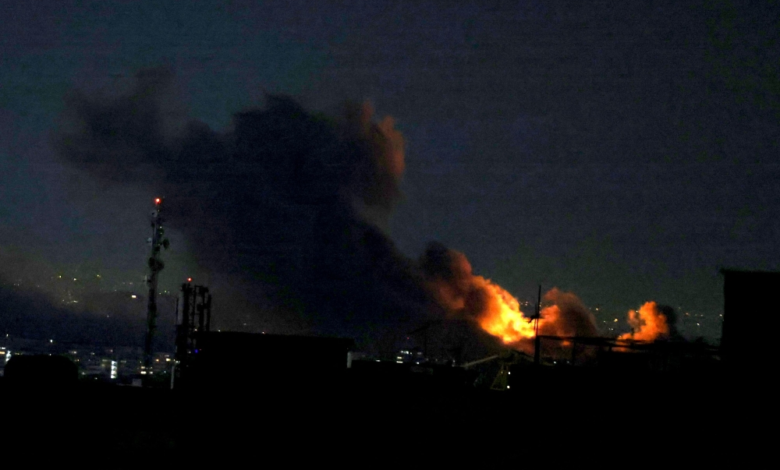

The Iranian president announces his readiness to end the war
In a significant diplomatic development amid escalating tensions in the Middle East, Iranian President Masoud Pezeshkian declared that Tehran possesses the will to end the ongoing war and conflict with Israel and the United States. These important remarks came during a telephone call between Pezeshkian and European Council President António Costa, in which the Iranian president emphasized the necessity of obtaining guarantees to prevent any recurrence of aggression against Iranian territory or its strategic interests.
General context and historical background of the escalation
The Iranian president's remarks come at a time of unprecedented tensions in the Middle East since the outbreak of war in the Gaza Strip on October 7. The conflict has spread to multiple fronts, drawing in regional and international actors. Historically, relations between Iran, on the one hand, and Israel and the United States, on the other, have been characterized by a long-standing shadow war involving cyberattacks, assassinations, and tit-for-tat targeting. However, recent months have witnessed a dangerous shift toward direct military confrontation, with the two sides exchanging unprecedented missile and air strikes, bringing the entire region to the brink of a full-blown regional war. In this context, the United States has intervened strongly, bolstering its military presence in the region to protect its allies and deter further escalation.
The importance of the event and its expected impact
Pezeshkian's statements carry significant strategic importance and are expected to have effects on several levels:
- On the Iranian domestic front: The new Iranian administration seeks to de-escalate external tensions in order to focus on internal economic challenges and find ways to lift the Western sanctions that have burdened the Iranian economy for years. Ending the state of war would provide a more stable environment within Iran and allow resources to be directed toward development.
- Regionally, this diplomatic stance is a positive indicator that could contribute to calming the volatile fronts in the region, particularly in Lebanon, Syria, and the Red Sea. Reaching understandings with international guarantees could pave the way for a ceasefire in Gaza and reduce the likelihood of a large-scale military confrontation that could devastate the infrastructure of countries in the region and destabilize the Middle East.
- Internationally, these statements resonated widely in European capitals and Washington. The contact with the President of the European Council reflects Tehran's desire to involve Europe as a potential mediator or guarantor in any future agreement. Internationally, any de-escalation in the Middle East would positively impact the stability of global energy markets and the security of international shipping lanes, particularly the Strait of Hormuz, thus preventing further crises for the global economy.
The guarantees required and the future of diplomacy
Tehran's demand for guarantees against a recurrence of aggression reflects a deep crisis of confidence between the conflicting parties. The greatest challenge facing the international community, particularly the European Union and the United States, remains finding a diplomatic formula that addresses the security concerns of all sides and prevents a slide into open war. Ultimately, the Iranian president's statements offer a glimmer of hope for a new diplomatic path, provided that all parties involved demonstrate genuine political will to translate these statements into concrete and practical steps on the ground that guarantee regional and international security and stability.