
حملة “حج بصحة” لحماية ضيوف الرحمن
أطلقت وزارة الصحة السعودية تحذيرات هامة لضيوف الرحمن تزامناً مع موسم الحج، داعية إياهم إلى الالتزام التام بالإرشادات الوقائية للحد من مخاطر الإجهاد الحراري. وتأتي هذه الدعوة ضمن الحملة التوعوية الشاملة التي أطلقتها الوزارة تحت شعار “حج بصحة”، والتي تهدف إلى رفع مستوى الوعي الصحي لدى الحجاج، وضمان تعاملهم السريع والسليم مع أي أعراض قد ترتبط بالتعرض المباشر لدرجات الحرارة المرتفعة أثناء أداء المناسك في المشاعر المقدسة.
السياق التاريخي وتحديات المناخ في الحج
تاريخياً، يُعد موسم الحج من أكبر التجمعات البشرية على وجه الأرض، حيث يتوافد الملايين من المسلمين من شتى بقاع العالم إلى مكة المكرمة في وقت واحد. ونظراً للموقع الجغرافي للمملكة العربية السعودية، غالباً ما تتزامن مواسم الحج مع أشهر الصيف التي تشهد ارتفاعاً كبيراً في درجات الحرارة. وقد شكل هذا التحدي المناخي دافعاً مستمراً للحكومة السعودية لتطوير البنية التحتية في المشاعر المقدسة، مثل تركيب مراوح الرذاذ، وتوفير المظلات الضخمة، وتجهيز المستشفيات الميدانية بأحدث التقنيات للتعامل مع حالات الإجهاد الحراري وضربات الشمس التي طالما شكلت خطراً على صحة الحجاج في العقود الماضية.
الأهمية والتأثير المحلي والدولي
تكتسب هذه الإجراءات التوعوية والوقائية أهمية بالغة على المستويات المحلية والإقليمية والدولية. فعلى الصعيد المحلي، تساهم هذه الإرشادات في تخفيف الضغط على المنظومة الصحية السعودية والمستشفيات في مكة المكرمة والمشاعر المقدسة، مما يتيح للكوادر الطبية تقديم رعاية أفضل للحالات الحرجة. أما إقليمياً ودولياً، فإن نجاح المملكة في حماية الحجاج من المخاطر الصحية يعكس كفاءة الإدارة السعودية للأزمات الصحية، ويضمن عودة ملايين الحجاج إلى بلدانهم وهم في أتم الصحة والعافية، مما يمنع انتقال أي مضاعفات صحية عبر الحدود.
أعراض الإجهاد الحراري ومخاطره
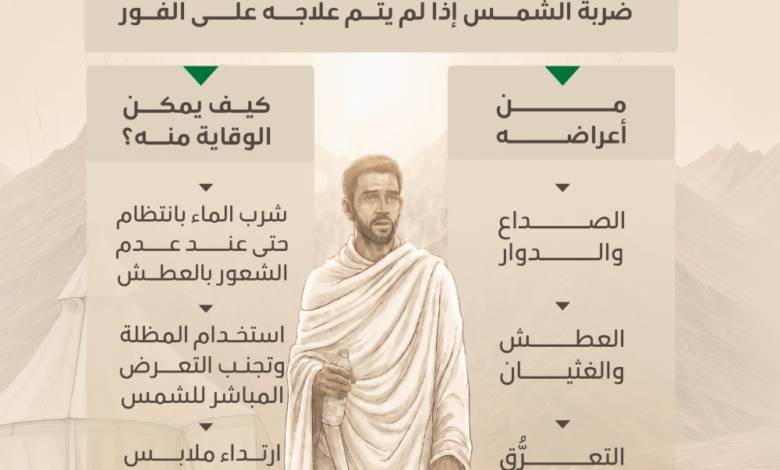
وفي سياق التوعية الطبية، أوضحت وزارة الصحة أن الإجهاد الحراري يُعد حالة طبية طارئة تنتج عن التعرض لفترات طويلة للحرارة المرتفعة، مما يؤدي إلى فقدان كميات كبيرة من السوائل والأملاح من الجسم عبر التعرق. وحذرت الوزارة من أن إهمال هذه الحالة قد يؤدي إلى تطورها لضربة شمس خطيرة تتطلب تدخلاً طبياً عاجلاً. وبيّنت الوزارة أن من أبرز أعراض الإجهاد الحراري التي يجب الانتباه إليها: الصداع الشديد، الدوار، العطش المستمر، الغثيان، التعرق المفرط، وتسارع ضربات القلب، مشددة على ضرورة طلب المساعدة الطبية فور الشعور بأي من هذه العلامات.
طرق الوقاية والإسعافات الأولية
ولضمان سلامة الحجاج، أكدت الوزارة أن الوقاية الفعالة تبدأ بخطوات بسيطة ولكنها حاسمة، أبرزها شرب المياه بكميات وفيرة وبانتظام حتى في حال عدم الشعور بالعطش، لتعويض السوائل المفقودة. كما نصحت باستخدام المظلات الشمسية للوقاية من الأشعة المباشرة، وتجنب الخروج في أوقات ذروة الحرارة، مع الحرص على ارتداء ملابس خفيفة ذات ألوان فاتحة، وتقليل المجهود البدني قدر الإمكان خلال فترات النهار.
وأضافت الوزارة أنه في حال الاشتباه بالإصابة بالإجهاد الحراري، ينبغي على الحاج أو مرافقيه طلب المساعدة فوراً، وإعطاء المصاب ماءً بارداً، ونقله إلى مكان مظلل أو مكيف الهواء. كما دعت الجميع إلى عدم التردد في التواصل مع مركز الاتصال الموحد التابع لوزارة الصحة على الرقم 937 للحصول على الاستشارات الصحية الفورية أو طلب الدعم الطبي الميداني عند الحاجة. وتأتي هذه الجهود المتواصلة لتؤكد حرص المملكة على توفير بيئة صحية آمنة تمكّن ضيوف الرحمن من أداء مناسكهم بيسر وسهولة وطمأنينة.