Talks between the Saudi Foreign Minister and his Canadian counterpart: Important issues

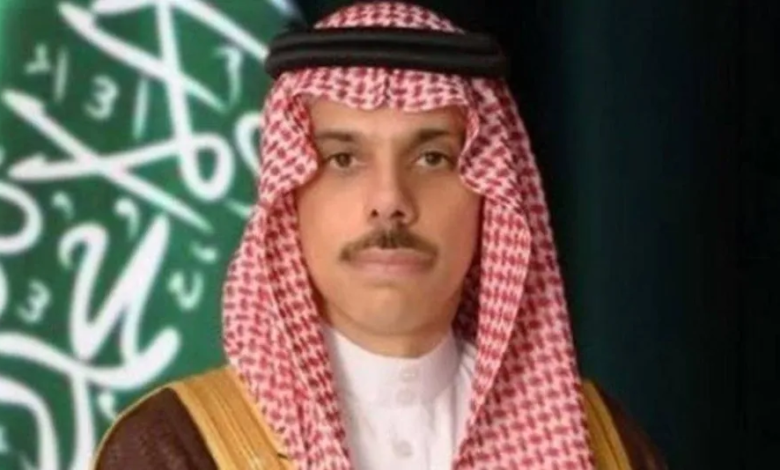
His Highness Prince Faisal bin Farhan bin Abdullah, the Saudi Minister of Foreign Affairs, discussed with Her Excellency Melanie Joly, the Canadian Minister of Foreign Affairs, the latest developments on the regional and international scenes, in addition to discussing a number of topics of common interest, and ways to strengthen bilateral relations between the two friendly countries.
These talks come within the framework of the continued high-level diplomatic communication between the Kingdom of Saudi Arabia and Canada, which has witnessed remarkable development during the past period, especially after the agreement to restore full diplomatic relations between the two countries in May 2023. This communication represents confirmation of the desire of both sides to turn the page on past differences and move forward towards a partnership built on mutual respect and common interests, which reflects the Saudi diplomatic approach based on diversifying international partnerships and extending bridges of cooperation with various global powers.
On the regional front, developments in the Middle East, particularly the situation in and around the Gaza Strip, occupy a prominent place in these discussions. Saudi Arabia plays a pivotal and leading role in efforts to de-escalate tensions and protect civilians, given its presidency of the Arab-Islamic Summit. This makes coordination with G7 countries, such as Canada, crucial for garnering international support for sustainable, peaceful solutions and for upholding the two-state solution as the only path to stability in the region.
From an economic and strategic perspective, Saudi-Canadian cooperation is of particular importance given both countries' membership in the G20, which comprises the world's strongest economies. The Kingdom's Vision 2030 offers promising investment opportunities for Canadian companies in the mining, renewable energy, education, and technology sectors. Furthermore, as an energy-producing nation, Canada shares with the Kingdom an interest in the stability of global energy markets and the security of waterways, making their coordination a positive force for the global economy.
Continued political consultations between Riyadh and Ottawa not only serve bilateral interests but also contribute to strengthening international peace and security, as both parties seek to find common approaches to address current global challenges, from humanitarian crises to climate change and counter-terrorism.