Nesmo Olympics 2024: Launch of the third phase to discover talented individuals

The third phase of the inaugural National Science and Mathematics Olympiad, "Nasmo," kicked off on Saturday. This initiative is the result of a strategic partnership between the Ministry of Education and the King Abdulaziz and His Companions Foundation for Giftedness and Creativity (Mawhiba). It is part of ongoing, integrated national efforts to discover and nurture gifted students in scientific fields and develop their abilities to compete at the highest levels.
General context and the Kingdom's Vision 2030
The Nesmo Olympiad is a practical embodiment of the goals of Saudi Vision 2030, which places human capital development at the heart of its priorities. By providing a stimulating and competitive environment, the Kingdom seeks to build a generation of leaders and innovators in the fields of science, technology, engineering, and mathematics (STEM), capable of driving the knowledge-based economy and achieving sustainable development. The Mawhiba Foundation, established in 1999, plays a pivotal role in realizing this vision through its various programs targeting gifted individuals from an early age.
Details of the crucial third phase
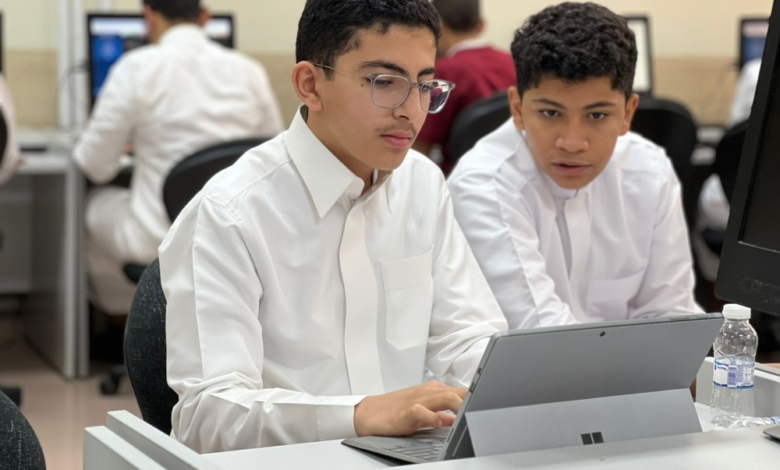
This stage of the competition continues until April 30th, with 9,945 male and female students who successfully completed the previous two stages competing. This stage begins with an intensive in-person training program conducted in 16 different educational districts across the Kingdom. The students are trained by 528 teachers who have been previously qualified to deliver advanced scientific content. Following the training period, the students will undergo a rigorous in-person exam designed to assess their readiness and progress, and to select the top students who will advance to the final stages.
Importance and expected impact
The importance of the “Nesmo” Olympiad extends beyond its status as a mere competition; it is a comprehensive system for talent development. Locally, the Olympiad contributes to expanding the pool of talented individuals in public education and localizing advanced training programs within educational departments, thereby enhancing teacher competency and enriching curricula with higher-order thinking skills. Internationally, the Olympiad's graduates form the core of the national teams that represent the Kingdom in approximately 30 international and regional Olympiads annually. Achieving success in these global events strengthens the Kingdom's scientific reputation, affirms the success of its investments in the education and talent development sectors, and opens promising horizons for students to compete for places in the world's most prestigious universities.