
Inspection tour to enhance logistical efficiency
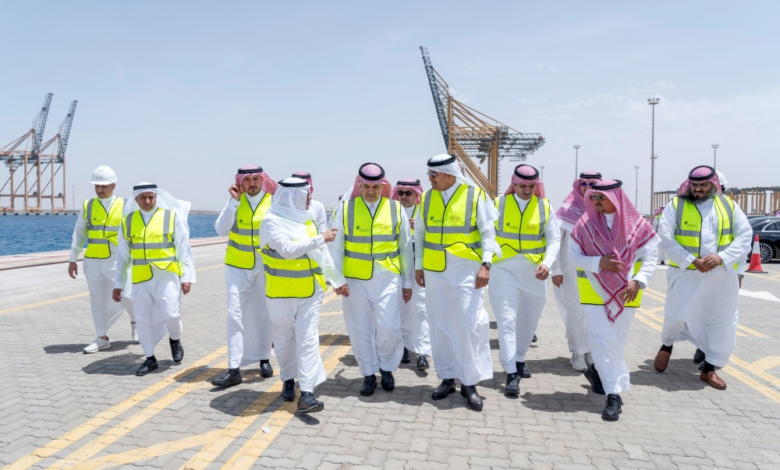
In a strategic move aimed at strengthening the Kingdom of Saudi Arabia's position as a global logistics hub, the Minister of Transport and Logistics, Engineer Saleh bin Nasser Al-Jasser, accompanied by His Excellency Fahd bin Abduljalil Al-Saif, conducted a comprehensive inspection visit to King Abdullah Port in Rabigh Governorate. This field visit comes within the framework of the government's ongoing efforts to monitor the development of the logistics sector, ensure the smooth flow of container handling, and enhance the operational efficiency of supply chains in line with the objectives of the National Transport and Logistics Strategy and Saudi Vision 2030.
General context and historical background of the port
King Abdullah Port, located within King Abdullah Economic City, is a landmark in the history of the modern Saudi economy. It is the first port in the Kingdom and the region to be fully developed, managed, and operated by the private sector. Since its inception, the port has embodied a successful and innovative model of public-private partnerships. It was designed as a state-of-the-art maritime gateway that meets the latest international standards, contributing to reducing dependence on oil and diversifying national income sources by revitalizing the maritime transport sector and facilitating access to international markets.
The importance of the event and its local, regional, and international impact
This inspection tour is of paramount importance on several levels. Locally, the port plays a pivotal role in serving the major industrial centers of Mecca, Medina, Yanbu, and Rabigh. It also contributes to supporting special economic zones that provide an attractive regulatory environment for local and international investments. Regionally, the port enhances connectivity between Red Sea ports and the Gulf Cooperation Council (GCC) countries, ensuring the continuous flow of goods and increasing the volume of incoming and outgoing containers, especially given the geopolitical challenges and current conditions in the region, thus guaranteeing the resilience of supply chains.
Internationally ,Europe, and Africa. With a massive handling capacity exceeding 20 million TEUs annually and deep-water berths reaching up to 18 meters, the port possesses the exceptional capacity to accommodate the world's largest container ships. This advanced infrastructure ensures the smooth flow of global trade through the Red Sea and supports value chains and export industries.
Facility readiness and business continuity
During the visit, the two ministers reviewed mechanisms for enhancing the efficiency of supply chains and logistics services, and conducted a field inspection of cargo handling operations at the port. They confirmed the port's full operational readiness to accommodate the increasing demands of global trade. They also monitored operations at the port's berths to ensure the smooth flow of goods and the continuity of highly efficient business, thus solidifying the Kingdom's position as a leading investment and logistics destination on the global map.