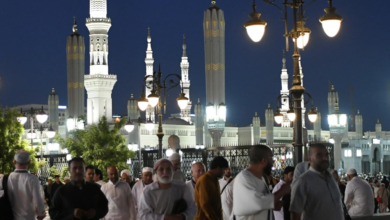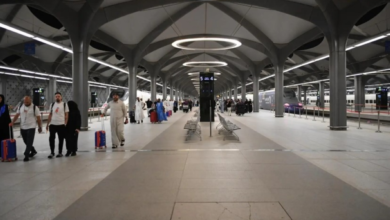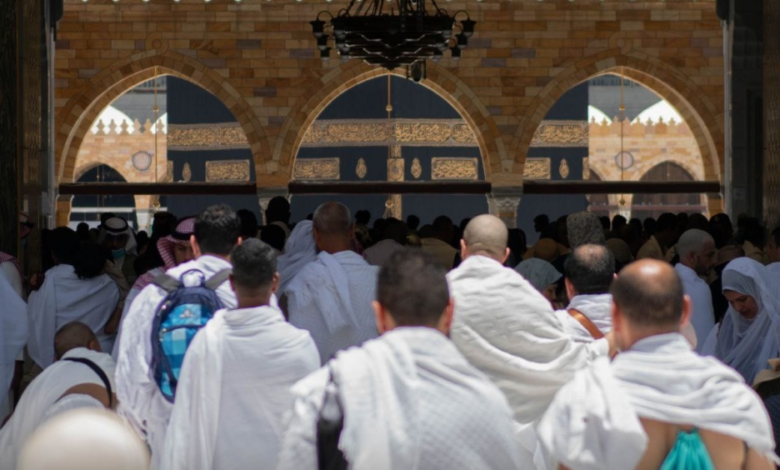
Four Umrah companies were suspended for manipulating crowd management and accommodation arrangements in Mecca and Medina

issued Ministry of Hajj and Umrah Saudi
Details of observed violations
The ministry revealed in its official statement that the violations ranged from data manipulation to shortcomings in logistical services, with two companies involved in submitting inaccurate crowd management reports. This violation constitutes an attempt to circumvent the established organizational procedures for crowd flow, posing a risk to the smooth movement and safety of pilgrims. Furthermore, two other companies failed to adhere to the agreed-upon arrangements for pilgrim accommodation, a clear breach of contract and an infringement on the visitors' rights to decent and comfortable housing.
The importance of adhering to crowd management and accommodation standards
The crowd management system is of paramount importance in managing the large numbers of pilgrims within the Two Holy Mosques and the holy sites. Tampering with the crowd management lists is not merely an administrative violation, but a transgression that jeopardizes the safety of pilgrims, as security and regulatory authorities rely on the accuracy of this data to ensure that overcrowding does not occur. Furthermore, accommodation is a fundamental pillar of the pilgrim's comfort, and any negligence in meeting accommodation standards negatively impacts the visitor's spiritual experience, something that the relevant authorities categorically reject.
Regulatory context and the Kingdom's Vision 2030
These stringent measures align with the objectives of the Kingdom's Vision 2030, specifically the Guests of God Service Program, which aims to facilitate the hosting of Umrah pilgrims and provide them with the highest quality services. The Ministry of Hajj and Umrah continuously works to develop systems and regulations to ensure a smooth and safe experience for the millions of Muslims who visit the Kingdom annually. These decisions underscore that the Kingdom considers "quality" and "safety" as inviolable red lines, and that the expansion in the number of Umrah pilgrims is matched by stricter oversight to ensure that service standards are not compromised.
Warning message to service providers
The relevant department within the Ministry emphasized that it will not tolerate any negligence or breach of contractual or regulatory obligations. The Ministry considers the rights of pilgrims to be a paramount and non-negotiable priority. It issued a firm call to all Umrah institutions and companies to fully comply with all approved regulations and provide services according to the established official standards and arrangements, stressing that legal penalties will be imposed on anyone who dares to compromise the well-being and comfort of the pilgrims to the Holy Mosque.