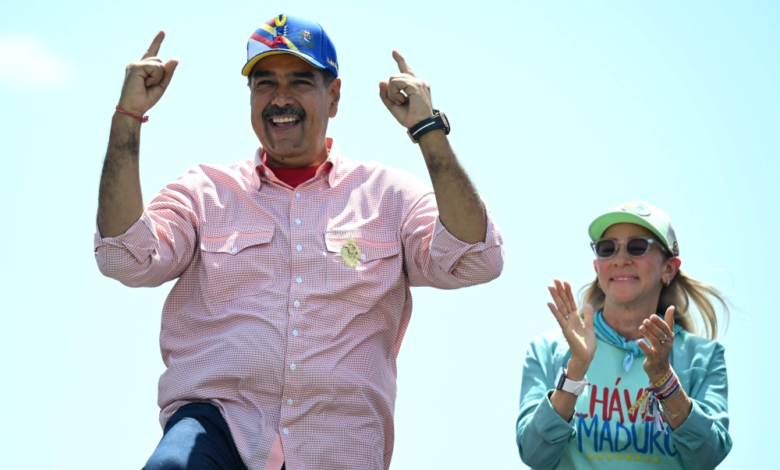
Maduro arrested: Venezuela demands Trump provide proof of the president's life

In a dramatic turn of events in Caracas, Venezuelan Vice President Delcy Rodríguez asserted on Saturday that she has no knowledge of President Nicolás Maduro's whereabouts, issuing a formal and urgent demand to the United States for "concrete proof" that Maduro is still alive. These statements come amidst a climate of anticipation and uncertainty following US President Donald Trump's announcement of a large-scale military operation that resulted in the Venezuelan president's capture.
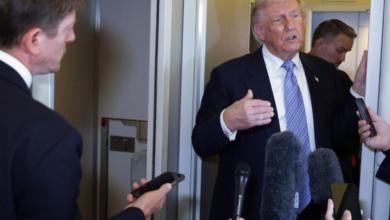
In an exclusive interview broadcast on Venezuelan state television, a visibly shaken Rodríguez said, "In the wake of this brutal attack on our country last night, we assure the people and the world that we do not know the whereabouts of President Nicolás Maduro or First Lady Cilia Flores. We hold the U.S. administration fully responsible and demand that the government of President Donald Trump provide immediate proof that they are alive." These statements further cloud the political landscape in Venezuela, especially after Trump's assertion that U.S. forces had successfully captured Maduro and his wife and extracted them from the country by air.
The context of the historical conflict between Washington and Caracas
This rapidly unfolding event cannot be separated from the tense historical context of US-Venezuelan relations, which has spanned more than two decades since the rise of the Chavista movement to power. Washington has consistently considered the Maduro regime illegitimate, particularly after the 2018 elections, the integrity of which was questioned by Western powers. Successive US administrations have pursued a policy of "maximum pressure," imposing crippling economic sanctions on Venezuela's oil sector, diplomatic isolation, and support for the political opposition, in an attempt to force Maduro to step down.
It is worth noting that the US Department of Justice had previously filed formal charges against Maduro and several of his top aides for involvement in "narco-terrorism," offering a $15 million reward for information leading to his arrest. This legal and political backdrop makes a military intervention or arrest the culmination of years of escalating tensions, with Caracas regularly accusing Washington of plotting military coups and assassination attempts to destabilize the country.
Potential regional and international repercussions
The confirmation of the arrest of a sitting head of state by foreign forces sets a dangerous precedent in international relations, and this event is expected to have a political seismic impact extending far beyond Latin America. Domestically, Venezuela could face a power vacuum that might lead to internal conflict between different factions within the regime or between the military and the opposition, threatening to plunge the country into widespread security chaos.
Internationally, this move is likely to provoke angry reactions from Venezuela’s strategic allies, particularly Russia, China, Iran, and Cuba, who have long supported Maduro economically and militarily. This escalation could lead to major geopolitical tensions, as well as a direct impact on global energy markets, given Venezuela’s possession of the world’s largest proven oil reserves. The world now awaits the coming hours, which will be crucial in determining Maduro’s fate and the future of Venezuela.