
Introduction: Escalating security tensions in the region
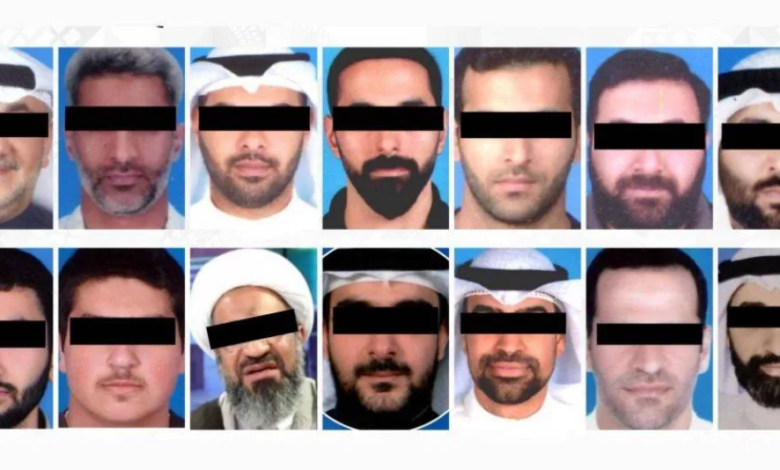
In light of the rapidly evolving security situation in the Middle East, the Gulf Cooperation Council (GCC) states are taking decisive and intensive steps to counter both direct and indirect threats. Alongside the repeated attacks by armed militias in the region, the GCC's pursuit of cells belonging to the Iranian Revolutionary Guard and Lebanese Hezbollah has emerged as a top priority for safeguarding national security and regional stability.
The historical context of confronting Iranian interventions
These security measures were not spontaneous, but rather an extension of long-standing and continuous efforts led by the Gulf Cooperation Council (GCC) states to curb Iran's expansionist influence. In 2016, the GCC states and the Arab League designated Hezbollah as a terrorist organization, based on the party's involvement in recruiting young people from Gulf countries, smuggling weapons, and training operatives to carry out acts of sabotage. The past few years have witnessed the dismantling of numerous terrorist cells, most notably the "Abdali cell" in Kuwait, and several other sabotage cells in Bahrain and Saudi Arabia, which investigations have proven received direct training and funding from the Iranian Revolutionary Guard.
The prosecutions coincided with regional attacks
The current crackdown on cells affiliated with the Iranian Revolutionary Guard and Hezbollah coincides with an escalation in attacks targeting infrastructure and shipping lanes in the region. Gulf security agencies understand that these sleeper cells do not operate in isolation from other militias, but rather form an integrated network aimed at gathering intelligence, laundering money, and facilitating arms and drug smuggling to finance terrorist operations. Dismantling these networks is a preemptive strike that prevents coordinated attacks that could target the stability of Gulf states and harm their vital interests.
Importance and impact: locally, regionally, and internationally
Local and regional impact
Domestically, these security operations contribute to strengthening the internal front of the Gulf states and protecting their economic and developmental gains from any attempts at sabotage. Regionally, tightening the noose around Iran's proxies limits Tehran's ability to use them to blackmail neighboring countries and reinforces the sovereignty of Arab states in the face of regional hegemonic projects, thus creating a more stable environment for growth and prosperity.
International impact and global security
Internationally, the impact of these pursuits is not limited to the Middle East. The Arabian Gulf region is a vital artery for global energy supplies. Any security threat posed by cells affiliated with the Revolutionary Guard or Hezbollah directly impacts oil markets, the global economy, and international shipping. Therefore, Gulf efforts are supported and coordinated extensively with global intelligence agencies to track the complex financial networks that Hezbollah relies on to fund its transnational activities.
a summary
The Gulf states' continued pursuit of cells affiliated with the Iranian Revolutionary Guard and Hezbollah sends a clear and firm message that the region's countries will not compromise on protecting their security and stability. With ongoing security challenges and regional attacks, heightened security vigilance and joint intelligence cooperation among the Gulf Cooperation Council (GCC) states remain a strong shield against externally supported networks of terrorism and sabotage.