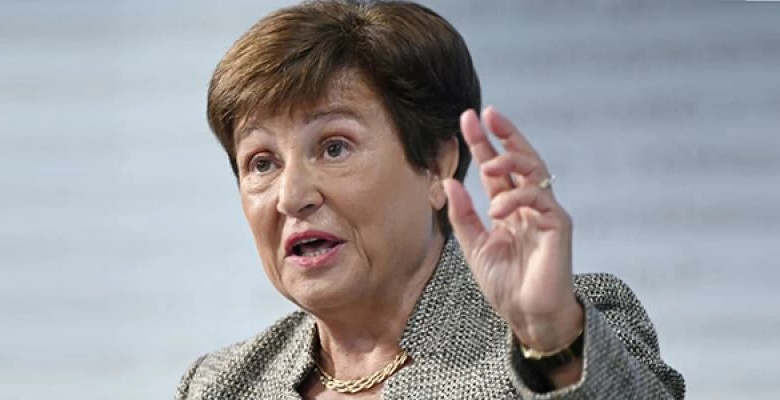

In recent remarks, IMF Managing Director Kristalina Georgieva stated that the shock of war and escalating geopolitical tensions in the Middle East has cast a heavy shadow over the global economy, leading to a significant downward revision of global growth forecasts. These remarks come at a critical juncture for the international economy, as attention turns to the IMF and World Bank meetings scheduled for next week, which will prioritize discussions on mechanisms and strategies to mitigate the economic repercussions of the Middle East conflict.
General context and historical background of economic crises
This shock was not a sudden occurrence, but rather the culmination of a series of successive crises that have plagued the global economy in recent years. Following a fragile recovery from the COVID-19 pandemic, the world faced widespread disruptions to supply chains, followed by major geopolitical crises that directly impacted energy and food markets. The Middle East is a vital artery for the global economy, particularly in the energy sector, and any instability there is immediately reflected in international markets and inflation rates.
The impact of the war on energy markets and inflation rates
Georgieva explained that the current conflicts have led to unprecedented disruptions in energy markets, noting that the war has caused a decrease in global oil flows of up to 13%, in addition to a 20% drop in natural gas supplies. This sharp decline in supply has led to higher production and transportation costs, contributing to rising global inflation. The IMF Managing Director warned that raising interest rates may be a necessary and inevitable step to combat inflation caused by these crises, despite the potential for further slowing growth. She also stressed the need for countries to refrain from unilaterally controlling energy prices, emphasizing that it is impossible to overcome the current energy shock without pain or economic sacrifices.
Food security crisis and rising hunger rates
On the humanitarian and social front, the figures presented by Georgieva revealed a grim reality, indicating that an additional 45 million people have joined the ranks of those facing acute food insecurity. This brings the total number of hungry people worldwide to over 360 million. This deterioration is primarily due to disruptions in supply chains and rising commodity prices, posing existential challenges to developing and impoverished nations that demand urgent international intervention.
Financial repercussions and the need for international support
Given these complex challenges, the Managing Director of the International Monetary Fund anticipated that the institution would receive requests for financial support ranging from $20 billion to $50 billion in the near term, as a result of the immediate repercussions of wars and regional tensions and their far-reaching effects. In closing, Georgieva emphasized the crucial role of financial authorities in various countries in providing safety nets and support to the most vulnerable and affected groups, to ensure societal stability and mitigate the impact of successive economic shocks.