
State of emergency and large-scale evacuation
The US state of California is on high alert and facing widespread concern over the potential for a catastrophic explosion of a tank containing toxic chemicals. This serious threat has forced local authorities to take urgent measures, including the evacuation of tens of thousands of residents from their homes to ensure their safety. Authorities have ordered the evacuation of approximately 40,000 people in the Garden Grove area of Orange County, southeast of Los Angeles. This precautionary measure comes in response to a dangerous leak from a chemical tank that could release toxic fumes over a densely populated residential area, increasing the likelihood of a devastating explosion.
Chemical details and cooling efforts
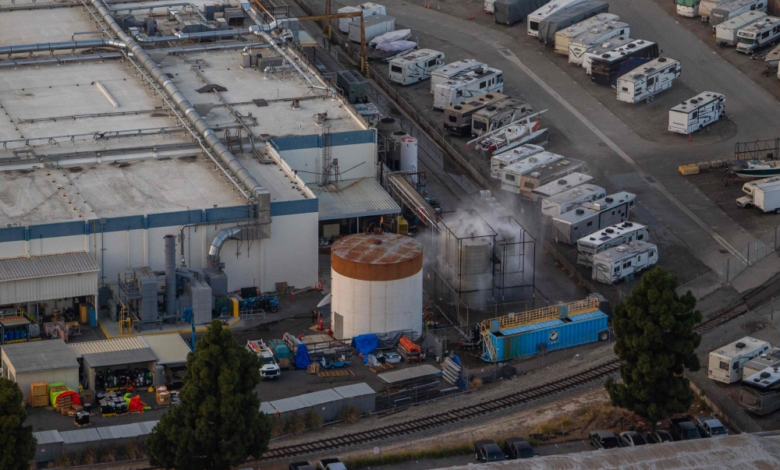
The tank in question contains 26,000 liters of methyl methacrylate, a highly flammable liquid primarily used in the manufacture of plastics. In an effort to control the situation, the operations commander at the scene, Craig Coffey, stated that emergency crews are working around the clock to mitigate the risk of a potential explosion. He noted that an additional tank with a capacity of over 55,000 liters could be affected if the main tank explodes. Coffey expressed his concern, explaining that the tank's temperature had risen from 25 degrees Celsius to 32 degrees Celsius and continues to increase by approximately one degree per hour, posing a significant challenge to firefighters who are working to cool the tank using water hoses. Aerial footage showed a massive 128,000-liter tank being sprayed with water.
Health and environmental risks
On the other hand, authorities are racing against time to prevent an environmental disaster by erecting barriers to prevent the toxic substances from leaking into stormwater drains and rivers that flow into the ocean. Although no injuries have been reported so far, the US Environmental Protection Agency (EPA) has warned that methyl methacrylate causes severe irritation to the skin, eyes, and mucous membranes. The agency also cautioned about the negative effects on the respiratory and nervous systems of inhaling these fumes for short or prolonged periods.
Historical context and expected impact
Historically, California has been one of the strictest US states regarding environmental regulations, but urban sprawl and the proximity of residential areas to industrial facilities have long presented a complex challenge. This incident recalls previous industrial accidents in the United States that led to radical changes in policies for storing hazardous materials. Locally, this event caused temporary disruption to daily life and placed immense pressure on emergency services. Regionally and internationally, such incidents highlight the importance of securing supply chains associated with the plastics industry and are prompting international organizations to reassess standards for storing flammable materials, potentially paving the way for stricter global legislation to protect communities near industrial areas.