The truth about Mohamed Salah admitting that the penalty kick against South Africa was incorrect

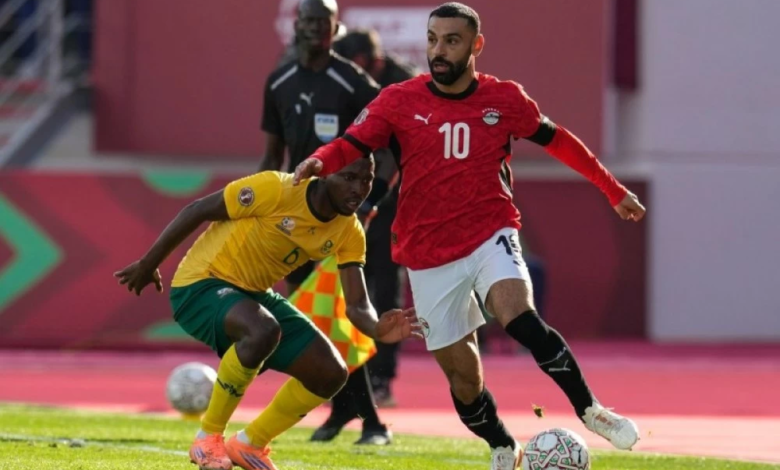
In a decisive official response to end the controversy raised in the media, the Egyptian national team management categorically denied the news circulating about the team's captain, the global star Mohamed Salah, having any side conversation with the coach of the South African national team, the Belgian Hugo Broos, after the match that brought the two teams together last Friday as part of the second round of Group B in the African Cup of Nations currently being held in Morocco.
This clarification came from the media coordinator of the Egyptian national team, Mohamed Murad, who wrote on his official Facebook account, confirming that what happened between Salah and Bruce did not exceed the limits of the usual sports protocol of exchanging greetings and peace after the final whistle, stressing that any other statements attributed to the Pharaohs’ captain are baseless and fall under the category of rumors.
The roots of this media crisis go back to the press conference held by Hugo Broos after the match, where he made a surprising statement that Mohamed Salah had verbally admitted to him that the penalty kick awarded to the Egyptian national team, which decided the result of the match, was not correct. This statement caused widespread controversy in sports circles and across social media platforms, prompting an official and quick response from the Egyptian side to maintain the team's focus.
Mohamed Salah successfully converted the controversial penalty kick into the only goal of the match, leading his national team to a valuable 1-0 victory. This win secured the Pharaohs the top spot in Group B and officially qualified them for the Round of 16 of the continental tournament, thus enhancing the team's chances of progressing towards the title.
A rich history and continental aspirations
This incident comes at a time when the Egyptian national team, which holds the record for the most wins in the Africa Cup of Nations with 7 titles, is seeking to regain its continental throne, which has been absent since 2010. Egyptian and Arab fans place great hopes on this generation, led by Mohamed Salah, to achieve the eighth star, especially in light of the fierce competition in African football and the development of the levels of teams such as Senegal, Morocco, and South Africa.
Psychological warfare in major tournaments
Sports analysts believe the South African coach's statements fall under the category of "psychological warfare," a common tactic in major tournaments, where coaches often attempt to distract opponents or pressure referees in subsequent matches by raising controversy over officiating decisions. Maintaining the players' mental stability, especially influential stars like Salah, is one of the most important roles of the Egyptian national team's management to ensure continued success in the upcoming knockout stages.