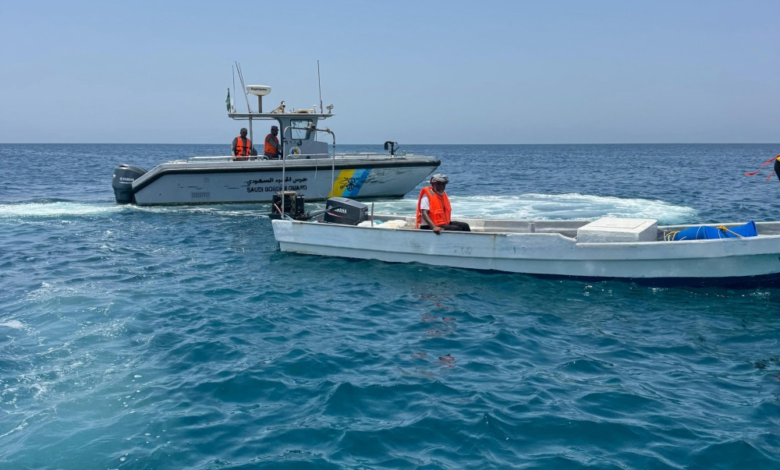

Coastal patrols of the Border Guard in Rabigh Governorate, Makkah Region, apprehended a citizen for violating the safety and security regulations for those engaged in maritime activities within the Kingdom of Saudi Arabia's territorial waters. The apprehension was the result of ongoing monitoring by Border Guard teams to ensure compliance with the regulations and laws governing maritime activities and fishing.
The relevant authorities explained that the violation consisted of fishing without the necessary permits and using prohibited fishing gear. A quantity of fish caught illegally was found in his possession. All necessary legal procedures were taken against the violator, and he was referred to the competent authorities to complete the legal proceedings and apply the penalties prescribed for such cases.
Protecting fish stocks and the marine environment
These efforts reflect the Kingdom of Saudi Arabia's commitment, through its security and environmental sectors, to protecting living aquatic resources and maintaining ecological balance in the Red Sea and the Arabian Gulf. The regulations governing safety and security for those engaged in maritime activities are a cornerstone for ensuring the sustainability of natural resources, aiming to regulate fishing operations and prevent unsustainable practices that could deplete fish stocks or damage coral reefs and marine ecosystems.
These measures are particularly important in light of the Kingdom's Vision 2030, which prioritizes environmental protection and enhancing quality of life. Preserving the marine environment has far-reaching implications, extending to economic and tourism sectors. The Kingdom's coastlines represent a promising destination for tourism investment, necessitating strict enforcement of regulations to ensure the sustainability of these resources for future generations.
Call for compliance and reporting
In closing, the General Directorate of Border Guards urged all citizens, residents, and those engaged in maritime activities to fully comply with regulations and instructions and to obtain the necessary licenses before engaging in any maritime activity. It emphasized that the use of prohibited equipment poses a significant threat to wildlife and exposes the perpetrator to legal accountability.
The Directorate also called on everyone to contribute to protecting the nation and its resources by reporting any violations or attacks on the environment or wildlife. Reports can be made by calling 911 in the Makkah, Riyadh, Eastern Province, and Madinah regions, or 994, 999, and 996 in the rest of the Kingdom. The Directorate emphasized that all reports are treated with complete confidentiality and without any liability on the part of the reporter.