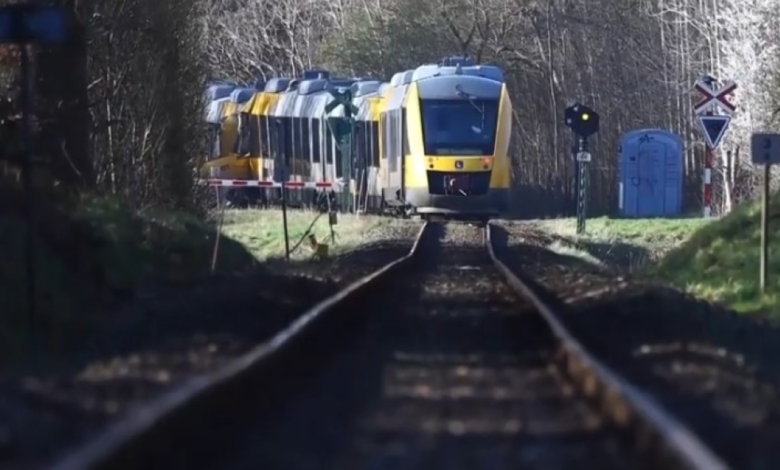

Denmark was rocked by a tragic train collision on Thursday morning north of Copenhagen, injuring 18 people, five of whom were in critical condition. The accident occurred in a wooded area near the town of Hillerød, about 40 kilometers from Copenhagen, prompting a large-scale emergency response from local authorities.
Details of the incident and emergency response
Local police received a report of the accident at 6:29 a.m. local time (4:29 a.m. GMT). Initial reports indicate a head-on collision between two trains on the same track, which explains the severity of the damage and the number of injuries. Images from the scene show extensive damage to the front of both trains, with the driver's cabins completely destroyed and windshields and windows shattered by the force of the impact.
Anders Dam-Hemdal, head of the medical department at Copenhagen's emergency services, stated that the head-on collision resulted in multiple and severe injuries, with passengers being violently thrown in all directions within the carriages. Rescue teams, police, and ambulance services immediately rushed to the scene, and all the injured were transported to nearby hospitals for treatment. Rescue operations were declared over by mid-morning after a large-scale mobilization.
General context and safety record of Danish railways
Denmark is known for having one of the safest and most advanced railway networks in Europe, boasting an excellent safety record, which makes accidents of this magnitude rare and a cause for public concern. The country relies heavily on trains as a primary mode of transport for both passengers and freight, and it continuously invests in upgrading its signaling and safety systems. This incident underscores once again the importance of regular maintenance and strict adherence to safety protocols, particularly on regional lines that may include single-track sections requiring extremely precise train scheduling.
The importance of the incident and its expected impact
Locally, the accident caused significant disruption to transport in the north of the capital, affecting thousands of commuters who rely on the line to get to work. Hillerood Council also set up a psychosocial support center for uninjured passengers and their families to help them cope with the trauma of the accident.
At the national level, the accident sparked a broad debate about safety standards in the railway sector. The Danish Accident Investigation Board is expected to launch a comprehensive technical investigation to determine the precise causes of the collision, whether it was due to human error, a technical malfunction in the signaling systems, or a mechanical problem with one of the trains. The results of this investigation will be crucial not only for holding those responsible accountable but also for implementing any necessary system modifications to ensure such tragedies do not recur and to maintain public confidence in the national railway network.