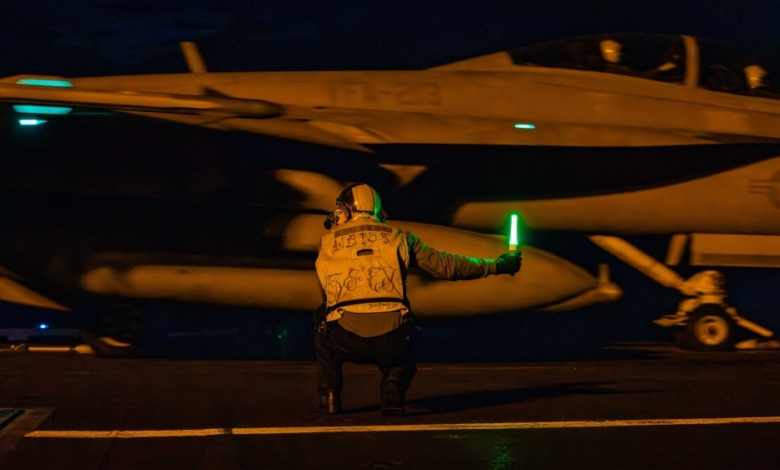

The Pentagon has revealed the enormous financial costs of its military operations aimed at deterring Iran in the Middle East, with a senior official stating that the cost has reached approximately $25 billion since late February. This disclosure, made during a congressional hearing, highlights the significant economic burden the United States bears in maintaining its extensive military presence in the region.
According to Joel Hearst, the Pentagon's chief accountant, the vast sum spent on what is officially known as Operation Epic Wrath was primarily allocated to procuring advanced munitions and military equipment. He stated, "We spent $25 billion on this operation," emphasizing that a significant portion of the budget was directed towards bolstering the strategic munitions stockpile. However, Defense Secretary Pete Hegseth later clarified during the same hearing that the actual estimated cost at this stage might be less than $25 billion, though this did not diminish the enormity of the figure or its significance in the ongoing debate surrounding U.S. policy toward Iran.
A historical background of ongoing tension
These costs are not a sudden occurrence, but rather the result of decades of tension between the United States and Iran, which began in earnest after the 1979 Islamic Revolution in Iran. Tensions have escalated significantly in recent years, particularly after the United States withdrew from the nuclear agreement (the Joint Comprehensive Plan of Action) in 2018 and reimposed crippling economic sanctions as part of its “maximum pressure” campaign. In response, the region has witnessed a series of incidents, including attacks on oil tankers and critical infrastructure, prompting Washington to bolster its military presence to an unprecedented degree to protect its interests and regional allies.
The importance of the event and its strategic impact
The significance of revealing these figures lies in the stark contrast they offer with the exorbitant cost of military deterrence. Domestically, these costs fuel debate within the United States regarding spending priorities, particularly in light of internal economic challenges. Regionally, the ongoing US military buildup, while ostensibly aimed at deterring Iran, contributes to the militarization of the region and increases the risk of an accidental military confrontation, which could have disastrous consequences for the stability of the entire Middle East.
Internationally, this approach affects relations between the United States and its European allies, who still favor diplomatic solutions with Tehran. Furthermore, any escalation in the Strait of Hormuz, the vital waterway through which a significant portion of the world's oil passes, could disrupt global energy markets and negatively impact the global economy. Therefore, revealing this cost is not merely a figure in the defense budget; it is an indicator of the profound strategic and economic complexities surrounding the Iranian issue.