Princess Nourah University celebrates women's empowerment on International Women's Day

As part of its ongoing efforts to enhance the role of women in society, Princess Nourah bint Abdulrahman UniversityInternational Women's Day on Sunday evening. The celebration, chaired by Dr. Fawzia Al-Amro, aimed to highlight the journey of empowering Saudi womenand showcase their comprehensive developmental leadership within the framework of the Kingdom's Vision 2030. The event witnessed a large and notable attendance of female leaders and diplomats, reflecting the great importance the Kingdom places on the role of women at all levels.
Historical context: Princess Nourah University as the largest women's educational institution
Historically, March 8th is an international day celebrating women's achievements across various fields. In Saudi Arabia, this day coincides with a golden age for Saudi women, thanks to the unwavering support of the wise leadership and empowering legislation. Princess Nourah University in this context as the largest women's university in the world, established as a leading scientific and cultural beacon. Since its inception, the university has undertaken the responsibility of preparing generations of academically and professionally qualified women to contribute to building the nation and driving development, making its celebration of this day a true embodiment of its historical and academic mission.
A logo that reflects confidence and creativity
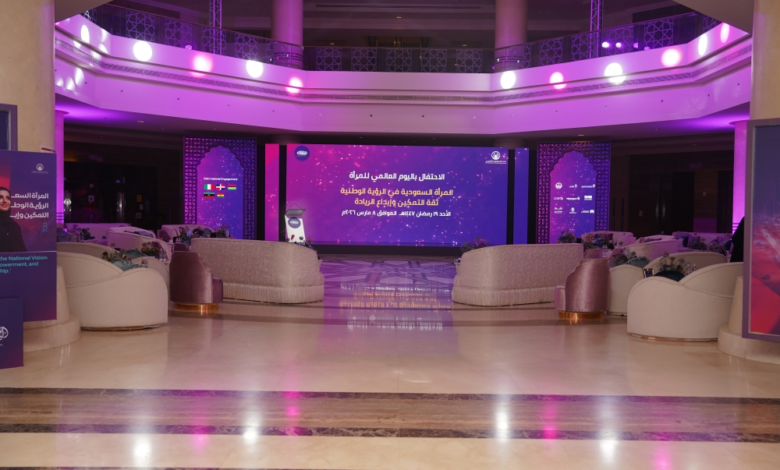
The main event was held at the university's conference center, under the inspiring theme: "Saudi Women in the National Vision: Confidence, Empowerment, and Innovation." The event was attended by a distinguished group of businesswomen and community leaders who represent exemplary national role models. This large gathering of women was not merely a celebration, but a platform for exchanging experiences and showcasing the success stories achieved by women in various fields.
Developing female talent and leading local transformation
The events highlighted the pivotal role of women as essential elements in building and developing societies. The university emphasized its strategic role in preparing highly qualified female professionals who enhance Saudi Arabia's position as an active partner in sustainable development. Domestically, this approach aligns with the goals of Vision 2030, which has already succeeded in increasing women's participation in the labor market and their assumption of senior leadership positions, positively impacting the national economy and society as a whole.
Interactive exhibitions and regional and international impact
The event included a visual presentation documenting women's achievements, along with an interactive exhibition showcasing women's contributions in the public, private, and non-profit sectors. Successful female entrepreneurs also shared their experiences. To emphasize the university's regional and international impact, an interactive pavilion was dedicated to international scholarship students, highlighting the university's global developmental role in disseminating knowledge and empowering women from around the world, enabling them to return to their countries as leaders and agents of change.
Sustainable awareness activities and initiatives
Various departments, faculties, and colleges within the university engaged with the event by launching a wide range of awareness activities and initiatives across campus. These on-campus efforts included setting up educational booths and distributing informational materials aimed at reinforcing positive values and promoting community awareness. This celebration reflects the university's ongoing commitment to achieving the goals of its strategic plan, which focuses on empowering women and enhancing their intellectual and academic presence in a sustainable manner. This university environment, which fosters innovation, aspires to graduate female leaders capable of guiding the nation's progress with competence and capability.